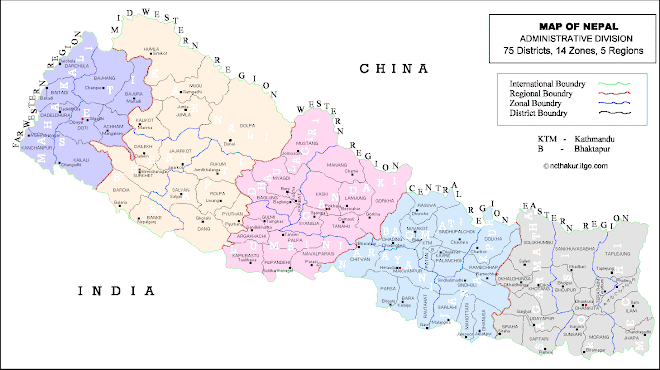
Map of Nepal

Map of Nepal

Monday, July 2, 2012

Just like a mirage


Just like a mirage

  • The word ‘consensus’ has been bandied about since 1990, but it is nowhere near being realised

(0 Votes)
PRAKASH K SHRESTHA, ANJAN PANDAY
0
consensus
More Photos »
JUL 02 -
We have been hearing the phrase “political consensus” since 1990. Its use increased in 2006 with the start of the peace process. Even though the buzzword has existed in political circles for more than two decades, Nepal is yet to see its concrete realisation. Even though everybody kept reiterating the word consensus during the period following the election to the Constituent Assembly (CA), the Nepali people could not get a new constitution. Instead, Nepal is now in an unprecedented political quagmire because of an elusive political consensus, and politicians have restarted uttering the term daily.
Political consensus refers to an agreement between political parties over certain issues. This type of agreement is necessary in a multiparty system in order to execute a common agenda for the welfare of the country. Internationally, this phrase was used to describe the practice of governance in Britain during the period 1945-1979. Britain’s two political parties, Conservative and Labour, forged an agreement over certain government policies. Similarly, US President Eisenhower was able to gain a large degree of political consensus in post-World War II period.
In Nepal, the results of the CA election opened the necessity for parties to forge an issues-based consensus. But the political parties never made any serious efforts towards a meaningful consensus. Rather they have been busy spelling the term consensus merely as rhetoric just for personal gain.  
Theoretically, consensus politics can generate political synergy for the benefit of the country. If we look back in history, we see that a joint effort of the Nepali Congress (NC) and the United Left Front succeeded in abolishing the 30-year long partyless Panchayat regime in 1990. After the restoration of the multiparty system too, Nepal was in dire need of political consensus to create a platform of stability, growth and prosperity. However, Nepali politics soon drifted in the wrong direction which resulted in a political stalemate.
In 1991, the NC won the first post-Panchayat election with a majority, and Girija Prasad Koirala became the first elected prime minister. It was the right time to pave the way for institutional development. Koirala used to state frequently the necessity of political consensus to protect “infant democracy”. Although he was right in saying so, it didn’t materialise in practice. Instead, internal feuds within the NC led to the premature demise of the Koirala government as it lost a no-confidence motion. In the election that followed, no single party obtained a majority, and the country plunged into an era of political instability, providing a fertile ground for the Maoist “People’s War”.  
Again, in the third election after the restoration of democracy, the NC won a majority in 1999 and formed the government. Yet again, internal differences within the party resulted in the government collapsing, notably three times in three years. Eventually, the party split into two, giving enough clout to then-king Gyanendra to seize power. Thrown out on to the street, the parties were forced to make compromises and join hands with one another, which resulted in the 12-point agreement with the Maoists. This led to the successful 19-day People’s Movement 2 in 2006, which changed Nepal’s political landscape by abolishing the 240-year old monarchy. These developments clearly demonstrate the synergetic gains that can be achieved when parties unite.
However, the events that followed showed the fickleness in the political scene. After having some degree of political agreement until the declaration of a republic, the parties diverted towards a majority system in quest of political power, especially to form the government and continued the game of changing it. Even the new political force — the Maoists — behaved no differently than the old parties. Hence, in four years after the election to the CA, Nepal witnessed four governments. The outcome has, however, been worthless — the demise of the CA without promulgating a constitution. Immediately after the dissolution of the CA, the ruling Maoist party split, just repeating the history of the NC and the CPN-UML.
All these activities of Nepal’s political parties have shown that the leaders are individualistic and unaccustomed to a party system. Fragmentation of parties has become routine, especially when they are at the helm of government. All parties are marred by intra-party conflicts. Hence, consensus is a long shot even within a party.  Surprisingly, in a country of 30 million people, we have more than two dozen parties. Although it would be undemocratic to object merely on the basis of number, what has been true in our case is that parties make or break just to grab power and to develop new power equations.  
Nepali politics can rightly be characterised by Prisoner’s Dilemma, a widely-known game in the field of Game Theory. In this game, two prisoners failed to cooperate although such cooperation would have resulted in a win-win situation for both. They failed to cooperate due to lack of trust. Guided by individual interests, they won’t cooperate; rather, they betrayed each other, which then results in an inferior outcome for both of them. Regardless of what the other does, each prisoner gets a higher payoff by betraying the other in this game. Hence, betraying is the equilibrium solution.
In politics, since a position in power is mutually exclusive, cooperation among different actors may not lead all of them to power concurrently. Hence, they tend to betray each other. There are powerful incentives for political leaders to choose the path of disagreement and non-cooperation for their own individual gain. The country as a whole is, however, losing in this game. In this context, unless the political leaders can think and act beyond their own individual gain, political consensus will remain elusive, and it can be realised only if there is a rotational payoff-sharing mechanism.
Shrestha is a PhD scholar at New School for Social Research, New York and Panday is pursuing PhD at American University, Washington, DC

Wednesday, April 18, 2012

कृषि क्षेत्र र आर्थिक विकासको आधार


काठमाडौ, वैशाख ६ - पछिल्लो समय प्रधानमन्त्री, अर्थमन्त्री, योजना आयोगका उपाध्यक्षदेखि केन्द्रीय बैंकका गभर्नरसम्मले मुलुकको आर्थिक विकासका लागि कृषि क्षेत्रको विकासमा जोड दिइएको पाइएको छ । कृषि क्षेत्रको विकासमार्फत नै देशको विकास भई गरिबी निवारण हुने ठम्याइ छ । यसका लागि नीति निर्माताहरूले बैंक तथा वित्तीय संस्थाहरूलाई कृषि क्षेत्रमा ऋण प्रवाह गर्न सुझाएका छन् । कृषि क्षेत्रमा आवश्यकता बमोजिम ऋण प्रवाह हुन नसकेको र आवश्यक पँुजीको अभावले कृषि क्षेत्रमा लगानी बढ्न नसकेको आधारमा ऋण प्रवाह गर्न उत्प्ररित गरेको देखिन्छ । बैंक तथा वित्तीय संस्थाहरूको कुल ऋणको ३ प्रतिशतजति मात्र कृषि क्षेत्रतर्फ प्रवाहित भएकाले त्यसतर्फ ऋण प्रवाह गर्न दबाबमूलक नीतिहरू ल्याइएको छ ।
नेपालमा कृषि क्षेत्रको बाहुल्यता मनग्यै छ । कुल गार्हस्थ्य उत्पादनको एक तिहाइ अंश कृषि क्षेत्रबाटै आउँछ । हुन त यो अंश तीन दशकभन्दा अगाडि ७० प्रतिशतभन्दा बढी थियो । कुल गार्हस्थ्य उत्पादनमा कृषि क्षेत्रको अंश घट्दै गएको छ, जुन स्वाभाविक पनि हो । विश्वको अनुभवले पनि के देखाएको छ भने आर्थिक विकास हुँदै जाँदा कृषिको कुल उत्पादनमा योगदान क्रमशः घट्दै जान्छ । जस्तैः अमेरिकी अर्थतन्त्रमा कृषि क्षेत्रको अंश १ प्रतिशत छ, त्यस्तै जापानको अर्थतन्त्रमा १.४ प्रतिशत छ । उदीयमान अर्थतन्त्रका रूपमा रहेको चीनको अर्थतन्त्रमा कृषि क्षेत्रको योगदान १०.१ प्रतिशत छ भने भारतीय अर्थतन्त्रमा कृषि क्षेत्रको योगदान १९.० प्रतिशत छ । यसरी आर्थिक विकास हुँदै जाँदा कृषि क्षेत्रको योगदान घट्दै गएको पाइन्छ । यसलाई देशको विकासको तहगत प्रक्रियाको रूपमा लिइएको छ । तर कृषि क्षेत्रको समग्र अर्थतन्त्रमा अंश कम देखिएको पनि विकसित देशहरूमा कृषि क्षेत्रको उत्पादकत्व कम भएर होइन, बरु अन्य क्षेत्रको योगदान बढी भएर हो । अमेरिकामा कुल जनसंख्याको ४ प्रतिशत कृषिमा संलग्न छन्, तर उनीहरूको उत्पादनले आन्तरिक खपतको अतिरिक्त निर्यात गर्न पर्याप्त छ । अर्कोतर्फ जापान, दक्षिण कोरियामा पर्याप्त कृषि भूमिको अभावमा खाद्यान्नको आयातमा निर्भर छन्, तर ती देशहरूले आर्थिक विकास गरी विकसित देशको स्थितिमा पुगेका छन् । युरोपियन देशहरू जस्तैः बेलायत र जर्मनीको विकासको आधार पनि कृषि थिएन । समग्रमा भन्नुपर्दा कृषि क्षेत्रको विकासले मात्र आर्थिक उन्नति भएका देशहरू विरलै छन् ।
जीवन निर्वाह गर्ने खाद्यान्न प्रदान गर्ने कृषि क्षेत्रको भूमिकालाई कम आँकलन गर्न नसकिए पनि यो क्षेत्रले आर्थिक सम्पन्नता हासिल गर्न ठूलो योगदान दिन सक्दैन । तर नेपालमा अहिले पुनः कृषिलाई प्राथमिकता दिन थालिएको छ । यो आफैमा नराम्रो त होइन, तर यो देशको सम्पन्नताका लागि कति सही बाटो हो, विश्लेषण हुनु जरुरी छ । त्यसमा पनि अहिले कृषि क्षेत्रमा बंैकिङ ऋणको मात्र अभाव छ भनेजस्तो गरेर बहसमा ल्याइएको छ । बैंक तथा वित्तीय संस्थाहरूलाई यस क्षेत्रतर्फ ऋण प्रवाह गर्न दबाब दिइएको छ । बैंक तथा वित्तीय संस्थाहरूले ऋण प्रवाह गरेमा कृषि क्षेत्रले फड्को मार्नेगरी  प्रचारमा ल्याइएको छ ।
नेपालमा अन्य आर्थिक क्षेत्रहरूसंँगै कृषि क्षेत्रको विकास हुनु जरुरी छ, तर यो क्षेत्र धेरै समस्याबाट ग्रसित छ । योजनाबद्ध विकासको बाबजुद पनि सिंचाइको सुविधा पुग्नसकेको छैन । झन्डै आधाभन्दा बढी कृषि भूमि सिंचाइविहीन छ । यसतर्फ खासै ध्यान पुगेको छैन । यसबाहेक कृषि क्षेत्र परम्परागत ढंगबाट संचालित छ । आधुनिक बीउबिजनदेखि कृषि प्रविधिको व्यवस्था छैन । यससंगै कृषिमा व्यावसायिकताको अभाव छ । यसमा पनि कृषि क्षेत्र सामाजिक रुपमा अपहेलित रहेको छ । विद्यालय शिक्षा लिनासाथ कृषि क्षेत्रमा काम नगर्ने प्रवृत्ति छ । समाजमा कृषि हेय पेसाको रुपमा रहेको छ । यसैले गर्दा कृषि क्षेत्रमा केही सम्भावना भए पनि हुलका हुल युवाह विदेशिएका छन् । अधिकांश मानिस कृषि पेसाबाट जीवन सुधार हुन नसक्ने देखेर नै विदेशिएको यथार्थ हो । अहिले विदेशबाट काम गरी पठाएको विप्रेषणले गरिबी घटाउनेदेखि समष्टिगत आर्थिक स्थायित्व हासिल भएको देखिन्छ, जसका आधारमा नीति निर्माताहरूले सन्तोष लिइरहेको अवस्था छ । 
मनसुन राम्रो भई कृषि क्षेत्रको उत्पादन बढेमात्र अहिले समग्र कुल गार्हस्थ्य उत्पादनको वृद्धिदर केही उच्च रहने गरेको छ । सधैको राजनीति किचलो, ऊर्जा र पूर्वाधारको अभावमा गैरकृषि क्षेत्र शिथिल रहेकोले अहिले कुल गार्हस्थ्य उत्पादनको वृद्धिदर कृषि उत्पादनमा भर पर्नुपर्ने अवस्था छ । तर यसैका आधारमा लामो समयका लागि नेपालको आर्थिक विकासको मूल आधार कृषि हुनसक्ने देखिंदैन । नेपाल कृषिप्रधान देश भए पनि प्रतिस्पर्धात्मक क्षमता छैन र उत्पादकत्व कम छ । भारतसंँगको खुला व्यापार र खुला सिमानाको अवस्थामा नेपालको कृषि क्षेत्रले भारतीय कृषि उपजसंँग प्रतिस्पर्धा गर्नसक्ने अवस्था छैन । यसमा पनि लामो समयसम्म स्थिर राखिएको भारतीय रुपैयाँसंँगको विनिमय दरले गर्दा नेपाली रुपैयाँ अधिमूल्यित भइरहेको अवस्थामा कृषि उत्पादनले निर्यात बढाउन नसक्ने मात्र होइन, आयात प्रतिस्थापन गर्न पनि गाह्रो छ ।
मानव जीवनका लागि कृषि प्रमुख क्षेत्र भए पनि यसैको आधारमा मात्र देशले सम्पन्नता हासिल गर्न सक्दैन । कृषि उपज आयतन धेरै मूल्य कम हुने वस्तु हो । ट्रकका ट्रक सामान निर्यात गरे पनि उच्च मूल्यका एक झोला सामान खरिद गर्न नसकिने क्षेत्र हो । लामो समय भण्डार गर्न नसकिने र भण्डारण गर्न उच्च लागत लाग्ने हुँदा कृषि क्षेत्रले अन्य उत्पादनका क्षेत्रसंग प्रतिस्पर्धा गर्न सक्दैन । त्यसमा पनि कृषि उपजको मूल्य र आम्दानी लचकता कम हुने हनाले मूल्य घटाएर बढी बेच्न सकिने र आम्दानी बढ्दा बढी खपत पनि हुँदैन । त्यसमा पनि उत्पादन राम्रो भएको बेला मूल्यमा गिरावट आउने तर मूल्य बढेको बेलामा बेच्ने उत्पादन नै नहुने स्थिति हुनेहुँदा किसानहरूको जीवनस्तर उठ्न कठिन हुन्छ ।
त्यस्तै वैकल्पिक रोजगारीको अभावमा दुई तिहाइ जनशक्ति कृषिमा आश्रति भएको देखिए पनि यो त्यति रोजगारीमूलक क्षेत्र होइन । कृषि क्षेत्रमा मौसमी रोजगारी बढी हुने हुनाले नै नेपालको अर्धवेरोजगारीको दर बढिरहेको छ । परम्परागत रुपमा कृषि नै प्रमुख पेसा भए पनि पूर्ण रोजगारीको अभाव र कष्ठकर जीवनस्तरले गर्दा नै कृषि पेसाबाट पलायन हुने प्रचलन बढेको छ । यसले गर्दा कृषि श्रमिकको अभाव बढ्दै गएकोले कृषि तुलनात्मक लाभको क्षेत्रका रुपमा रहने देखिंदैन ।
मुख्य गरेर सिंचाइको उचित व्यवस्था नभएसम्म मौसममा आधारित कृषि क्षेत्रमा उच्चतम जोखिम रहेको छ । यसका अतिरिक्त व्यावसायिक हुन बाँकी रहेको कृषि क्षेत्रमा बैंक तथा वित्तीय संस्थाहरूलाई कर्जाप्रवाह गर्न दबाब दिँदा वित्तीय जोखिम बढ्नेतर्फ ध्यान दिनुपर्ने देखिन्छ । वास्तविक किसानहरूभन्दा पनि अन्य व्यक्तिले कृषि क्षेत्रको नाममा बैंक ऋण लिई अन्य क्षेत्रमा उपयोग नगर्लान् भन्न सकिन्न । वास्तावमा किसानहरू बैंक ऋणभन्दा पनि समयमा मल र आधुनिक बीउबिजन नपाएको र मौसममा आधारित रहनुपरेको अवस्था छ । यस अवस्थामा दबाबमूलक ऋण प्रवाहले किसानहरूको ऋण ग्रस्तता बढाई जीवन झन् कष्ठकर हुनसक्छ । छिमेकी देश भारतका केही ठाउँहरूमा लघु वित्तीय ऋण प्रवाहले गर्दा गरिबी घटाउनुको सट्टा न्यून आय भएका मानिसहरूको आत्महत्या बढाएकोतर्फ नीति निर्माताहरूको ध्यान जानुपर्छ ।
राजनीतिक कचिंगलको अवस्थामा सरकारी तवरबाट कृषि क्षेत्रलाई दिइएको प्राथमिकता र चर्चा पञ्चायतकालको आधारभूत आवश्यकता र एसियाली मापदण्डको नाराजस्तै हुनसक्ने देखिन्छ । वास्तवमा युद्धस्तरमा सडक, सिंचाइ, जलविद्युतजस्ता पूर्वाधार निर्माण गरी उद्योग र सेवाक्षेत्र लगायतका आधुनिक क्षेत्रतर्फ विकास गर्दै लगेमा कृषि क्षेत्रको उत्पादकत्व बढ्ने सम्भावना रहन्छ । कृषि क्षेत्रतर्फ वास्तविक किसानलाई बीउबिजन, मल तथा सिंचाइको सहज आपूर्ति गराई उत्पादन लागत घटाएर भारतीय उत्पादनसंग प्रतिस्पर्धी नबनाएसम्म कृषि क्षेत्रबाट ठूलो अपेक्षा गर्नसक्ने स्थिति देखिंदैन । समग्र हरित क्रान्ति अथवा कृषि क्रान्ति गर्न सकिएमा भने अर्थतन्त्रमा केही परिवर्तनको अपेक्षा गर्न सकिएला ।

प्रकाशित मिति: २०६९ वैशाख ६ १०:४८ 

Friday, March 23, 2012

Nepal has underutilized trade opportunities with India' 
 
REPUBLICA
KATHMANDU, March 24: Despite enjoying zero tariff entry facility on most of the goods to India, which has a huge market potential, Nepal has largely underutilized the opportunities it holds in penetrating market and expanding exports to the next-door neighbor in the south, shows a latest report.

For instance, the total import demand for iron and steel in India in 2010 was close to $8 billion. 

But Nepal´s share of that was only 1.22 percent. Similarly, Nepal´s share of exports in India´s total imports of other exportable items on which Nepal has comparative advantage, including edible vegetables, copper articles, edible fruits and nuts among others, is below 2 percent. 

According to the report unveiled in Kathmandu on Friday, the reason behind low exploitation of available market potential in India is due to supply side constraints such as infrastructure, human capital, access to finance and technology, and labor issues. Touching upon the debate over the pegged exchange rate with India, the report notes that there is no decisive evidence to change the peg despite real exchange rate appearing to be revalued. 

"Devaluation is helpful if constraints like weak economic fundamentals, institutional and political fluidity and weak industrial and tradable sector is taken care of," reads the report. 

The report that is totally focused on Nepal-India trade has outlined that Nepal has a highest degree of trade intensity with India after Bhutan. "Nepal´s export basket is heavy with low-value products like ferrous metals, chemicals, crops and food products," states the report. The report prepared by South Asia Watch on Trade, Environment and Economics (SAWTEE) with the help of United States Agency for International Development (USAID) argues that Nepal has not been diversifying its production to increase the volume of export. 

According to the report, the non-tariff barriers that are hindering Nepal´s export to India are quarantine related issues, rules of origin, transport hassles, technical barriers to trade, quantitative restriction, domestic production and transit state permit. "Quarantine related issues have 39 percent of share in obstructing export to India," reads the report. 

Moreover, the report argues that Nepal should ratify the Special Economic Zone bill as soon as possible. "There are issues that should be addressed in domestic level and by India as well," the report states, adding: "The Inter-governmental Committee meeting between Nepal and India should address the issues like transporters´ accessibility and transit issues." 

The report also argues that the article III of Treaty on Control of Unauthorized Trade between Nepal and India should be reviewed and it should be open for the items that are imported for use in agriculture, manufacturing and service sector.


Published on 2012-03-24 01:45:36

Wednesday, March 21, 2012

Parasitical State: Economic Consequences of Remittance
By Anjan Panday/Prakash Kumar Shrestha   
Monday, 13 February 2012 11:54 
nepalnews.com
smaller text tool iconmedium text tool iconlarger text tool icon
Increasing dependency on remittances has resulted in a number of negative consequences for the Nepalese economy, making it a parasitical economy suffering from the ‘Dutch-disease’ type effects.

Remittance inflow has been growing substantially in recent years with a growing outflow of workers for foreign employment. Evidently, the inflow of remittance has contributed to reduce the level of absolute poverty, as found in the recent living-standard survey, even amidst political instability and economic stagnation. Despite this, increasing dependency on remittances has resulted in a number of negative consequences for the Nepalese economy, making it a parasitical economy suffering from the ‘Dutch-disease’ type effects.

In the last decade, remittances have grown tremendously. Remittance as a percentage of GDP was 2.03 in 2000, which reached 14.9 by 2005, and 23.2 in 2009. The number fell marginally to 22.09 in 2010. This number does not include remittances through informal channels and the contribution of a large number of workers in India. If we also consider these unrecorded remittances, it becomes clear to see what holds key for the survival of our economy.

Remittances in Nepal primarily have three economic implications. First, it is a stable and growing source of the foreign-exchange reserve in the country. This is vitally important from the point of view of macroeconomic stability. Second, it is the important source of income of more than 56 percent of households. Third, when remittances are received through financial institutions, it increases money/credit base and enhances liquidity in the system.

While increases in the household income directly increase the amount of disposable income, the expansion of liquidity in financial institutions tends to ease credit availability for individuals and businesses. The cumulative effect of the two can be seen in the rise in consumption in recent years. Most of demand generated from these spending is, however, met through imports.  With a low-level of domestic production, increases in imports increase trade deficit. An overvalued real exchange rate deteriorates this situation even further, since it promotes imports while discouraging exports. In our case, overvaluation is largely driven by the rigid peg with the Indian currency for a long time. Finally, increases in consumption also put pressure on prices to rise, helping the currency to be overvalued.

Apart from its impact on consumption and trade, increases in remittances have not translated into productive investment. In the absence of productive investment, caused primarily by collapse in the business and investment environment, remittances have continued to just facilitate a consumption-based city-centric economy.  Increasingly, our economy is turning into a retail-trading hub, where money spent generates less in productive investment and more in imports. A bulk of imports goes into meeting the basic needs of our society like petroleum products and primary goods.

Ironically, the most adverse impact seems to have been on the industrial sector. Our industrial sector has already been losing its strength despite trade liberalization, accession to WTO, and membership to regional trading blocs like SAFTA and BIMSTEC. With increase in remittances and the possibility of overvalued exchange rate, this sector is further undermined, especially those with export potential.  Add to this the power shortage and never ending labor conflict. This makes clear to see why we have been losing when our neighbors like Bangladesh has been maintaining a robust economic growth despite political instability.

Taken together, the impact of remittances on household, and businesses has resulted in a larger trade deficit.  For example, trade deficit as a percentage of GDP was 9.14 in 2000, which increased to 14.9 in 2005, and 21.1 in 2009. We will continue to see further worsening of the situation if the current situation persists.

In fact, we are highly dependent on remittance and remain absolutely vulnerable to any shock that will depress remittances flow for even a modest period of time as we saw recently.  In the aftermath of the 2008 financial crisis, the growth rate of remittances slowed significantly—from 46% to 11% between 2007/08 to 2009/10—which immediately hit our current account.  The impact was severe enough to turn the overall balance of payments into negative, prompting the central bank to seek an IMF-loan in June 2010. At the same time, the banking system witnessed serious liquidity crisis, almost ensuing instability in the financial sector. Thus, there exists a loop starting from remittances to consumption to trade deficit, and to the financial sector. Only after the recovery of remittance inflows in the beginning of the fiscal year 2011/12, the balance of payments started to be in the surplus, thereby easing the liquidity situation of the banking system.

The inflow of remittance has been possible because of massive exodus of youth. Several media recently reported about 40000 workers leaving every month to Gulf States and other destinations. A large number go to India which is not often reported in the media. By any account, that is a substantial number. Although this trend has been easing a job crisis at home, it will have serious economic and social consequences.

Yet foreign employment may not be a long-term solution for employment, and remittance inflows will not make economy productive and competitive. One obvious example of this is on rising pressure on wages because of such mass exodus of workers. There are many anecdotal stories of people having to pay much more even for a menial work. Moreover, import-based consumption supported by remittance cannot generate employment. More importantly, workers at lower-skill end, which constitute the bulk of our workers, are vulnerable to several other factors including long-term structural changes in the host country, rapidly changing technology, and the short-term nature of the work.

To summarize, we are in a conundrum — while remittance is indispensible, we also suffer from its adverse effects.  Hence, our dependency on remittance can best be characterized as parasitical in nature. Unless we change we will be in no different position than a parasite which eventually dies when the host rejects it. Our policy makers better recognize the need to generate employment in the country and do all that is necessary to develop a healthy and sustainable economy.

(Panday and Shrestha are PhD candidates at the American University, Washington DC, and The New School for Social Research, New York, respectively.)

Wednesday, September 28, 2011

विदेशिने र बसाइँ सराइँ बढेका कारण वृद्धिदर घट्यो


Wednesday, 28 September 2011 08:12 नागरिक


ज्ञान न्यौपाने, काठमाडौं, असोज ११- नेपालको जनसंख्या २ करोड ६६ लाख २० हजार ८ सय ९ पुगेको छ। दस वर्षअघिको तुलनामा करिब ३४ लाख ७० हजार थपिएका छन्। केन्द्रीय तथ्यांक विभागले मंगलबार सार्वजनिक गरेको जनगणना २०६८ को प्रारम्भिक नतिजाले काठमाडौं उपत्यकामा धेरैको अनुमानभन्दा निकै थोरै जनसंख्या देखाएको छ।


राजधानी काठमाडौं, ललितपुर र भक्तपुरमा जम्मा २५ लाख १० हजार ७ सय ८८ जना बस्छन्। यी तीनै जिल्लाबाट विदेश गएकासमेत जोड्दा पनि साढे २६ लाख नाघ्दैन।

कुल जनसंख्यामा १ करोड २९ लाख २७ हजार ४ सय ३१ (४८.५६ प्रतिशत) पुरुष र १ करोड ३६ लाख ९३ हजार ३ सय ७८ (५१.४४ प्रतिशत) महिला छन्। जनघनत्व १ सय ५७ प्रति वर्गकिलोमिटरबाट १ सय ८१ पुगेको छ। काठमाडौंमा सबभन्दा बढी ४ हजार ४ सय ८ जनघनत्व छ भने मनाङमा सबभन्दा कम ३ छ।


जनसंख्या वृद्धिदर घट्यो

विभागका अनुसार नेपालको जनसंख्या वृद्धिदर ५० वर्षकै सबभन्दा कम १.४० प्रतिशतमा झरेको छ। यो दस वर्षअघिको जनगणनाभन्दा ०.८५ विन्दु कम हो।

२०१८ को जनगणनामा १.३१ प्रतिशत वृद्धिदर थियो। त्यतिखेर कुल जनसंख्या ९४ लाख १३ हजार थियो। त्यसपछि २०५८ सम्म वृद्धिदर लगातार दुई प्रतिशतकै हाराहारी रह्यो।


किन घट्यो?

विभागको जनसंख्या महाशाखा प्रमुख रुद्र सुवालले बसाइसराइ बढ्नु र प्रजनन् दर घट्नुले जनसंख्या वृद्धिदर कम भएको बताए।


'विदेश गएकाहरूको संख्या अत्यधिक वृद्धि हुनु पनि यसको कारण हो,' उनले भने 'यसले स्वदेशमा रहेको जनसंख्या घट्ने, विदेश जानेको बढ्ने भइरहेको छ।'


जनगणनाको तथ्यांकले १९ लाख १७ हजार ९ सय ३ विदेशमा रहेको देखाएको छ। यसअघि ७ लाख ६२ हजार १ सय ८१ विदेशमा थिए। विदेशिएकामध्ये ८६.७ प्रतिशत पुरुष र १३.३ प्रतिशत महिला छन्। त्यस्तै, ग्रामीण क्षेत्रका ८५.३८ र सहरी क्षेत्रका १४.६२ प्रतिशत विदेशिएका छन्।


जनसंख्या विशेषज्ञ सरदकुमार शर्मा विदेशिनेमा प्रजनन् दर बढी हुने उमेर समूहका युवा पुस्ताको बाहुल्य भएकाले समग्र जनसंख्या वृद्धिमा असर परेको बताउँछन्। 'प्रजनन् दर घट्दा स्वाभाविक रूपले जनसंख्या वृद्धिदरमा प्रभाव पर्छ,' उनले नागरिकसँग भने।


कहाँ कति?

काठमाडौंको जनसंख्या कति पुग्यो? धेरैको अनुमान थियो, ४० लाख वा ५० लाख। जनगणना २०६८ ले यो अनुमानलाई गलत साबित गरेको छ। राजधानी काठमाडौंमा सबभन्दा बढी १७ लाख ४० हजार ९ सय ७७ जना बस्छन्। ललितपुरमा ४ लाख ६६ हजार ७ सय ८४ र भक्तपुरमा ३ लाख ३ हजार २७ छन्। काठमाडौंबाट ९७ हजार, ललितपुरबाट २३ हजार र भक्तपुरबाट ९ हजारभन्दा बढी विदेशिएको तथ्यांक पनि जनगणनाले देखाएको छ।


धेरैले सोचेभन्दा कम जनसंख्या देखिए पनि जनसंख्याविद्हरू यसलाई स्वाभाविक भन्छन्। काठमाडौंमा शैक्षिक, प्रशासनिक लगायत विभिन्न कारणले जिल्लाबाट वर्षैभरि आउजाउ भइरहन्छ। तर, तिनीहरू यहाँका स्थायी होइनन्। काम सकेपछि फर्कन्छन्। यस्तो आउनेजाने क्रम वर्षभरि चलिरहन्छ। यसले एकचोटिमा ४०-५० लाखजस्तो भान भए पनि खास जनसंख्या त्यति धेरै हुँदैन।


काठमाडौंपछि दोस्रो बढी जनसंख्या भएकोमा मोरङ छ। यहाँ ९ लाख ६४ हजार बसोबास गर्छन्। तेस्रो स्थानको रुपन्देहीमा ८ लाख ८६ हजार, चौथोमा झापा ८ लाख १० हजार र पाँचौंमा कैलाली ७ लाख ७० हजार छ।


सबभन्दा कम जनसंख्या भएको जिल्ला मनाङमा ६ हजार ५ सय २७ छ भने मुस्ताङमा १४ हजारभन्दा कम। त्यसपछि डोल्पा, रसुवा र हुम्ला पर्छ।


कुल जनसंख्याको आधा तराई क्षेत्रमै छन्। दस वर्षअघि ४८ प्रतिशत तराईमा बसोबास गर्थे। हिमाली क्षेत्रमा ६.७४ र पहाडमा ४३.११ प्रतिशत छ। यसअघि हिमालमा ७ र पहाडमा ४४.३ प्रतिशत थियो।


विकास क्षेत्रका आधारमा सबभन्दा बढी मध्यमाञ्चल (३६.५ प्रतिशत) र सबभन्दा कम सुदूरपश्चिमाञ्चल (९.६ प्रतिशत) छ।


कुल जनसंख्याको १७ प्रतिशत सहरी र बाँकी ८३ प्रतिशत ग्रामीण क्षेत्रमा छन्। सहरी जनसंख्या वृद्धिदर ३.३८ र ग्रामीणमा १.०३ प्रतिशत छ। यसले ग्रामीणबाट सहरी क्षेत्रमा बसाइसराइ तीव्र रहेको देखाउँछ।


जनगणनाअनुसार २३ जिल्लामा जनसंख्या वृद्धिदर अघिल्लोभन्दा घटेको छ। खासगरी द्वन्द्वको चपेटामा परेका जिल्लामा जनसंख्या कम भएको देखिन्छ।


'यो प्रारम्भिक नतिजा हो, पछि घटबढ हुनक्छ,' सुवालले भने, 'कम्प्युटर प्रोसेसिङका बेला

यसमा सामान्य परिवर्तन आउँछ।'


अघिल्लो जनगणनामा पनि प्रारम्भिकभन्दा केही फरक नतिजा आएको विभागले जनायो। महानिर्देशक उत्तमनारायण मल्लका अनुसार त्यतिखेर एक लाखभन्दा कम फरक परेको थियो।


दस वर्षमा १४ लाख परिवार थप

दस वर्षमा कुल १४ लाख ६ हजार ७ सय ६४ परिवार थप भएको गणनाले देखाएको छ। अहिले परिवार संख्या ५६ लाख ५९ हजार ९ सय ८४ छ। नतिजाअनुसार देशभर ४७ लाख ६७ हजार १ सय ९६ घर छन्। घर र परिवारको अनुपातमा प्रत्येक सय घरमा औसत १ सय १९ परिवारको बसोबास रहेको पाइएको छ।


जनगणनाले परिवारको आकार पनि पहिलेभन्दा सानो भएको देखाएको छ। यसअघि ५.४४ सदस्य रहेको एक परिवारमा अहिले ४.७० रहेको विभागले जनाएको छ।


छ दशकदेखिको जनसंख्या


वर्ष/वि.सं. जनसंख्या/हजारमा वार्षिक जनसंख्या वृद्धिदर/प्रतिशतमा

२०१८ ९,४१३ १.३१

२०२८ ११,५५६ २.०५

२०३८ १५,०२३ २.६२

२०४८ १,८४,९१ २.०८

२०५८ २,३१,५१ २.२५

२०६८ २,६६,२१ १.४०


बसोबास बढी भएका ५ जिल्ला

काठमाडौं- १७,४०,९७७

मोरङ - ९६४,७०९

रुपन्देही- ८८६,७०६

झापा- ८१०,६३६

कैलाली- ७७०,२७९

Wednesday, August 31, 2011

अस्थिर राजनीति र स्थिर विनिमय दर

नेपालको राजनीतिक अस्थिरताले सबै वाक्क भएको स्थिति छ । वि.सं. २०५२ सालदेखि नै राजनीति अस्थिर छ । यो अस्थिरताको टुंगो लाग्ने संकेत देखिँदैन । त्यस्तै नेपालमा मूल्य पनि अस्थिर र उच्च छ । अनि आर्थिक वृद्धिदर पनि अस्थिर र न्यून छ । तर, यही अस्थिरतामा एउटा कुरा भने स्थिर छ । त्यो हो नेपाली रुपैयाँको भारतीय रुपैयाँसँगको विनिमय दर । २०४९ सालदेखि यो स्थिर रहेको छ- एक सय भारतीय रुपैयाँ बराबर एक सय साठी नेपाली रुपैयाँ ।

यदि सो अवधिमा विनिमय दर स्थिर भएझैं नेपालको राजनीति पनि स्थिर भइदिएको भए सायद नेपाल दक्षिण एसियामा समृद्ध देश भइसक्ने थियो । यसरी हुनुपर्ने कुरा स्थिर भएन तर समयअनुसार परिवर्तन भइरहनुपर्ने कुरा स्थिर भइरहेको छ । यसले गर्दा आर्थिक क्षेत्र निस्साएकिो छ । सीधा सम्बन्ध नदेखिए पनि कतै स्थिर विनिमय दरले राजनीतिक अस्थिरता बढाएको त होइन ? यदि बजारमा आधारित विनिमय दर हुँदो हो त राजनीतिक नौटंकी र आर्थिक गतिहीनता विनिमय दरमा प्रतिबिम्बित हुने थियो । जसले गर्दा कतै राजनीतिका हर्ताकर्ताले अर्थतन्त्रतर्फ सोच्न बाध्य भई राजनीतिक नौटंकीमा केही कमी आउँथ्यो कि ।

नेपालको विनिमय दरको इतिहास हेर्ने हो भने २०१७ सालसम्म भारतीय रुपैयाँसँगको विनिमय दर बजार निर्धारित थियो । तर, त्यतिखेर सरकारी राजस्वसमेत भारतीय मुद्रामा संकलन गर्ने गरिन्थ्यो । यस्तो अवस्थामा नेपाली मुद्राको प्रचलन बढाउने उद्देश्यले २०१७ सालमा भारतीय रुपैयाँसँग स्थिर विनिमय दर तोकियो । त्यतिखेर तोकिएको भारतीय रुपैयाँसँगको स्थिर विनिमय दर र अहिलेको विद्यमान विनिमय दर एउटै छ ।

२०१७ सालपछि भारतीय रुपैयाँसँगको विनिमय दरलाई पटकपटक परिवर्तन गरिएको छ । २०२३ सालमा झन्डै नेपाली रुपैयाँ भारतीय रुपैयाँ बराबर थियो- एक सय भा.रु. बराबर एक सय एक नेपाली रुपैयाँ । तर, यो दर धेरै समय टिकेन, डेढ वर्षपछि नै नेपाली रुपैयाँलाई अवमूल्यन गर्न थालियो । पटकपटक अवमूल्यन गर्दै जाँदा २०४२ सालमा विनिमय दर एक सय भा.रु. बराबर १६८ ने.रु. थियो । यहाँसम्म अवमूल्यन गर्दै आइएकामा २०४८ मा नेपाली रुपैयालाई पुनर्मूल्यन गरी भा.रु. एक सय बराबर ने.रु. १६५ बनाइयो । खास गरी यो समयमा भारतमा भुक्तान सन्तुलन घाटामा गएको थियो र भारतले भारतीय मुद्रालाई अन्य मुद्रासँग उल्लेख्य मात्रामा अवमूल्यन गरेको थियो ।

बाह्य क्षेत्रको उदारीकरण गर्ने सिलसिलामा २०४८ फागुन २१ गते चालु खातालाई आंशिक परिवत्र्य बनाइयो । यसको झन्डै एक वर्षपछि २०४९ -१९९३ मार्च) माघ २ गते चालु खातालाई पूर्ण परिवत्र्य बनाइयो र नेपाली रुपैयाँलाई थप पुनर्मूल्यन गरी एक सय भा.रु बराबर एक सय साठी कायम गरियो । तत्पश्चात् भने विगतमा सक्रिय रहेको नेपालको विनिमय दर नीति निष्त्रिmय रहँदै आएको छ । यसरी विनिमय दरलाई नचलाइराखेको १९ वर्ष भइसक्यो । यो समयमा झन्डै बर्सेनि सरकार फेरिए तर विनिमय दर फेरिएको छैन ।

विनिमय दर स्थिर हुनुलाई सीधा रूपमा नराम्रो ठान्नुपर्ने देखिँदैन । त्यसमा पनि नेपालको आर्थिक हैसियत र व्यापार संरचनालाई हेर्दा बजार निर्धारित विनिमय दर आत्मसात् गर्ने आत्मबल आइसकेको देखिँदैन । तर पनि वास्तविक विनिमय दरलाई स्थिर राख्ने गरी बजारमा प्रयोग हुने विनिमय दरलाई समयानुकूल परिवर्तन गरिनुपर्ने हो । तर, त्यसो हुन सकिराखेको छैन ।

अरू केही स्थिर नभए पनि विनिमय दर त स्थिर छ । यसले के बिगारेको छ भन्ने प्रश्न उठ्न सक्छ । तर, यति लामो समयसम्मको भा.रु. सँगको स्थिर विनिमय दरले केही नकारात्मक असर पारेको छ । भा.रु. सँगको स्थिर विनिमय दरका कारण नेपाली रुपैयाँको अन्य विदेशी मुद्रासँगको विनिमय दरमा अनावश्यक उतारचढाव भइरहेको छ । यसले गर्दा नेपालको तेस्रो मुलुकसँगको बाह्य कारोबार प्रभावित भई बाह्य व्यापार भारतमुखी हुँदै गएको छ । अझ मुख्य कुरा त, नेपालको वास्तविक विनिमय दर अधिमूल्यित भएको छ । यसले गर्दा निर्यात नराम्री प्रभावित भएको छ । हुन त, राजनीतिक अस्थिरता र ऊर्जाको अभाव पनि प्रभाव पार्ने कारक हुन् तर तथ्यांकलाई हेर्दा नेपालको निर्यात र वास्तविक विनिमय दरबीच सीधा सम्बन्ध देखिन्छ ।

२०४९ साललाई आधार मान्दा २०५९ सम्म नेपालको भारतीय रुपैयाँसँगको वास्तविक विनिमय दर न्यून मूल्यित हुँदै गएको थियो । सो अवधिमा निर्यात पनि सुधार हुँदै गई २०५७/५८ मा कुल गार्हस्थ्य उत्पादनको १४.१ प्रतिशत पुगेको थियो । तत्पश्चात् नेपाली रुपैयाँको भा.रु. सँगको वास्तविक विनिमय दर अधिमूल्यित हुन थालेपछि निर्यात क्रमशः खस्कँदै गएको देखिन्छ । आर्थिक वर्ष २०६६/६७ मा नेपालको निर्यात कुल गार्हस्थ्य उत्पादनको ५.२ प्रतिशतमा झरेको छ । यसै अवधिमा नेपालले विश्व व्यापार संगठनलगायत साफ्टा र बिमस्टेकको सदस्यता लिएको छ ।

व्यापारका लागि सहयोग कार्यक्रम सञ्चालन गरी वैदेशिक सहायतामा निर्यात व्यापार बढाउन ठूलठूला चिल्ला प्रतिवेदनहरू पनि तयार पारिएका छन् । तर, निर्यात व्यापार भने खस्कँदै छ र व्यापार घाटा बढ्दो छ ।

निर्यात प्रबर्द्धनका माध्यमबाट चीनलगायत पूर्वी एसियाली देशहरू आर्थिक वृद्धि बढाउन सफल भइरहेका छन् । यसका लागि उनीहरूले विनिमय दर नीतिलाई चनाखोपूर्ण ढंगले प्रयोग गरिराखेका छन् । अमेरिकी धम्कीका बाबजुद पनि चीनले आफ्नो मुद्रा अधिमूल्यन हुन दिइराखेको छैन । भारत पनि यसतर्फ चनाखो छ । तर, नेपालले भने विनिमय दर नीतिलाई बेवारिसे रूपमा निष्त्रिmय छाडेेको छ ।

विनिमय दर अधिमूल्यित हुन जाँदा निर्यात नकारात्मक रूपमा प्रभावित भई समग्र आर्थिक वृद्धिदर खस्कन जान्छ । आर्थिक वृद्धिदर कम हुँदा रोजगारीका अवसरहरू घट्न जान्छन् । अहिले नेपालमा यही भइरहेको छ । नेपालमा रोजगारी पाउन कठिन छ । यसले गर्दा वैदेशिक रोजगारी मात्र नेपालीको बाँच्ने आधार भएको छ । पराम्परादेखि मुग्लान पस्न बानी परेका हामी नेपालीलाई मध्यपूर्व र पूर्वी एसियाली देशहरूको आर्थिक सम्पन्नताले कम्तीमा जिउने आधार प्रदान गरेको छ ।

वास्तवमा बर्सेनि ३ देखि ४ लाख युवा जनशक्ति वैदेशिक रोजगारीमा गएर मात्र अहिलेको भा.रु. सँगको स्थिर विनिमय दर यति लामो समय टिकेको हो । विप्रेषण आप्रवाहले भुक्तान सन्तुलन थामेकाले नै एउटै स्थिर विनिमय दर यति लामो समयसम्म रहेको हो । विप्रेषण आप्रवाह अलिकति प्रभावित हुनासाथ गत वर्षदेखि भुक्तान सन्तुलन घाटामा गएको छ । यसलाई सुधार गर्न आयातमा नियन्त्रणदेखि मौदि्रक नीतिलाई कडा पारिएको छ । यसको प्रभाव वित्तीय क्षेत्रमा नकारात्मक रूपमा देखा परिसकेको छ ।

अन्तमा, सधैं गोलचक्कर लगाइरहने नेपालको राजनीति तथा सरकार र नीतिगत विश्लेषणलाई ओझेलमा पारिराखेको व्यवस्थापनमुखी केन्द्रीय बैंकले तत्काललाई विनिमय दर नीतितर्फ ध्यान दिने देखिँदैन । त्यसैले, नेपालीका लागि बढ्दो व्यापार घाटा, भुक्तान सन्तुलनमा चाप र त्यसमा पनि मुख्य गरेर बढ्दो बेरोजगारी बेहोर्नुको विकल्प छैन ।

प्रकाशित मिति: २०६८ भाद्र १४ ०९:२९ kantipur

Wednesday, July 20, 2011

Capital flows to the emerging market economies: a perspective on policy challenges

Speech by Mr Jaime Caruana, General Manager of the BIS, at the Forty-sixth SEACEN Governors' Conference, Colombo, Sri Lanka, 24-26 February 2011.

Abstract

Capital flows to emerging market economies (EMEs) have displayed a dramatic pattern over the past decade. Following the collapse during 2008, capital inflows have rebounded since 2009 to pre-crisis levels. The recent increase in international capital flows is a sign of strength for the world economy, but it also poses unusual policy challenges. Global accommodative financial conditions can spur capital inflows and make it more difficult for EM policymakers to pursue their internal stabilisation objectives. Growing inflation pressures in EMEs and a multispeed global recovery put a premium on the pursuit of sound macroeconomic policy, especially monetary policy. Fiscal policy should aim at reducing debt in good times. Real exchange rate appreciation should form part of the response in rapidly growing EMEs. Macroprudential policies can usefully complement, but not substitute for, such sound macroeconomic policies. Capital controls can only temporarily respond to highly unusual circumstances. Sound national policy action can contribute to better global outcomes, but policymakers in both advanced and emerging economies should take into account the implications of their actions beyond their own borders.

Full speech

It is a great pleasure to be here. The SEACEN Centre has a long and distinguished record in promoting a better understanding of economic and financial matters that are of interest to central banks. Today's conference fits well with this tradition, focusing as it does on the post-crisis challenges to central banks in emerging market economies (EMEs).

Capital flows to EMEs have displayed a dramatic pattern over the past decade. From 2002 to 2007, private net financial flows to EMEs increased by a factor of 10, to almost $700 billion. The trend reversed temporarily on heightened risk aversion following the Lehman failure: overall net inflows to EMEs fell by about 75%, to around $200 billion in 2008. But these flows have quickly rebounded since mid-2009: in particular, net inflows to emerging Asia returned to their pre-crisis peak levels in the first three quarters of 2010.

Strong capital inflows bring benefits as well as challenges. The good news is that strong fundamentals in many EMEs have reduced their vulnerability to sudden variations in capital flows. In fact, and quite unlike past experience, this financial crisis was limited in its impact, especially in emerging Asia. Better fundamentals, much improved external positions and the buffers provided by accumulated forex reserves all played a part in this outcome.

On the other hand, EMEs now face new difficulties associated with abundant capital inflows. These raise a number of significant policy challenges.

In my remarks today, I would like to develop three main arguments:

  • First, the greater integration of EMEs in international capital markets is a welcome development for the world economy.
  • Second, strong capital inflows pose important policy challenges.
  • Third, these challenges put a premium on the sound conduct of macroeconomic policy.

1. The greater integration of EMEs in international capital markets is welcome

Let me start by emphasising that the recent increase in international capital flows should be considered as a sign of strength for the world economy.

First, international capital flows can contribute to channelling financial resources more efficiently. EM assets display a favourable risk-return profile, especially in Asia. Asia's economic dynamism suggests that capital should yield high returns - higher than those in industrial countries. Also, the riskiness of investing in EMEs has decreased, thanks to the steady improvement in their economic fundamentals. In particular, the contrast has sharpened between the greater macroeconomic stability observed in the emerging world and the large-scale deterioration in fiscal positions in many advanced economies. This new role of EMEs in the world economy is a long-term trend that has been under way for a decade - the crisis has only highlighted its importance.

Second, the increased integration of EMEs into international capital markets brings welcome diversification benefits - at both the national and the global level. So far, holdings of EM assets in the portfolios of advanced economy investors remain rather limited: by the end of 2009, the share of G7 countries' total portfolio investment assets in all EMEs was 9% (of which 4.6% was in emerging Asia). We can expect these shares to increase significantly in the years ahead. Increased financial globalisation also lets emerging market savers diversify into foreign assets. In fact, total gross capital outflows from major EMEs have already risen, from an average of less than $100 billion per year in the 1990s to $1.2 trillion in 2007.

Third, growing capital flows signal greater economic integration among EMEs themselves. By the end of 2009, the total amount of outstanding portfolio investments by major EMEs in each other's assets had reached almost $400 billion, up from about $150 billion just four years earlier. Such integration arises from financial liberalisation, the development of local currency bond markets, and growing internationalisation of the production chain, among other factors. This is particularly obvious in emerging Asia, where intraregional foreign direct investment has risen sharply in recent years. To take one example, China's direct investment flow into the ASEAN countries surged from $1.5 billion in 2005 to $27 billion in 2009. In Sri Lanka, China is investing in not only the Hambantota port but also a special economic zone not far from Colombo.

Taken together, we should welcome the secular trend towards stronger capital inflows into EMEs. Policymakers should not lose sight of this when thinking about how to deal with current challenges.

2. Strong capital inflows present important policy challenges

Let me now turn to key policy challenges. But before I address the first challenge, I would like to make a general observation. Perhaps it could be considered challenge number 0: the challenge of properly analysing capital flows and financial stability issues.

All too often, the analysis of capital flows gets trapped in the discussion about global imbalances. Flows tend to be analysed from the perspective of savings, investments and current account positions. However, from the monetary and financial stability viewpoint, a narrow focus on current account deficits and surpluses rarely provides enough information about relevant accumulations of risks and financial imbalances. And these financial imbalances led, among other factors, to the recent crisis.

I am not saying that global imbalances are unimportant. Clearly, they are relevant and raise policy issues of the first order. My point is that, by construction, they can capture only some of the risks.

What I am saying is that it is also important to monitor gross capital flows and their composition. It is gross rather than net flows that often matter for monetary and financial stability. Current accounts and the corresponding net capital flows say very little about financing activity, intermediation patterns, leverage use or liquidity mismatches. It is important, therefore, to analyse gross flows and complement this data with balance sheet analysis and market indicators.

Since the early 1990s, for example, the increase in gross capital flows into and out of the United States (that is, the change in gross claims) has expanded three times more rapidly than the increase in net claims on the country, which mirrors the current account deficit. These larger flows involve financial transactions not captured in the net current account financing but which are nonetheless relevant in explaining market and economic developments. A better understanding of these gross flows, balance sheet data and other indicators should help in choosing more effective financial stability policies.

Having made this point, let me move to the challenges.

A first challenge arises from the intrinsic volatility of financial flows. Looking at cross-border bank flows into EMEs, for instance, they have rebounded since the 2007 financial crisis, thanks to robust EM macroeconomic performance, favourable interest rate differentials, progress in the rebuilding of international banks' balance sheets and a move by institutional investors to correct the underweighting of EM assets in their portfolios. Yet cross-border lending has remained volatile from one quarter to another. Preliminary data indicate that the cross-border lending of international banks to emerging Asia rose by $77 billion in the third quarter of 2010, up 8.5% in that quarter alone. This inflow contrasts with an outflow of twice that size in the fourth quarter of 2008 (-$158 billion, of which Korea suffered -$56 billion). And we have also seen portfolio outflows in some countries over the past few weeks.

This volatility raises the threat of a sudden drying-up of market liquidity in key segments, leading to potential financial instability. Many EMEs felt the knock-on effects of such liquidity problems in global markets during the recent crisis.

Volatility also makes it hard for policymakers to distinguish between the underlying secular trend of flows that should be welcomed from transitory flows subject to reversal.

A second challenge lies in how EMEs can best avoid importing accommodative financial conditions. Weaker growth prospects and persistent financial fragilities in advanced countries have led to a prolonged period of near zero interest rates and unconventional policies in the largest economies. This has raised the attractiveness of EM assets and sharpened the incentives for capital inflows.

Concurrently, inflationary pressures have picked up in emerging markets. It is important to note that recent increases in food prices partly reflect the current food shortage. As such, they could persist and exert a still larger impact on EMEs, which tend to have higher food weights in their consumption baskets.

Global accommodative financial conditions have made it more difficult for EM policymakers to pursue their internal stabilisation objectives. This is perhaps particularly obvious in the case of bank flows, which directly contribute to local credit growth.

More generally, strong capital flows put upward pressure on the value of EM exchange rates, thus raising concerns over export competitiveness. As a result, policymakers hesitate to raise interest rates in response to upward pressure on domestic prices arising from increasing commodity costs and rapid demand growth. Ultimately, unavoidable monetary tightening widens interest rate differentials vis-à-vis advanced economies. This, in turn, can suck additional global capital flows into EM assets, thus driving exchange rates even higher. Meanwhile, large-scale sterilised foreign exchange market interventions may lose their effect or become increasingly costly as domestic rates continue to rise. In these conditions, the clear risk is that EME central banks will fall behind the curve.

But even if EM central banks raise short-term rates, global bond market developments may limit the effect of tightening on local bond market yields. Large-scale asset purchases seek to lower benchmark bond yields, especially those of US Treasury bonds. This policy is difficult to calibrate, not least because it takes us into partially uncharted waters. In theory, the direct purchase of securities can influence bond market yields via portfolio balance effects as private investors seek to replace the duration removed from the market and bid up the price of other financial assets.

The analysis becomes more complicated when debt management policies are considered. In the case of the United States, recent changes in government debt issuance policies have worked in the opposite direction: the duration of US government debt issuance is indeed lengthening, which tends to drive up longer-term yields. The Federal Reserve has estimated that the November 2010 decision to purchase another $600 billion worth of Treasuries may have lowered the 10-year Treasury yield by 25 basis points, all else being equal. This suggests that the impact of unconventional policies is relatively modest, not least in comparison with the normal volatility displayed by long-term interest rates as they respond to growth prospects, fiscal policy and anticipated inflation.

To the extent that central banks outside the United States buy dollars to resist currency appreciation and invest them in US government bonds, they stand shoulder to shoulder with the Federal Reserve on the bid side of the bond market.

Yet there are other channels through which bond-buying programmes influence global financial conditions, some of which raise financial stability risks. One is through the exchange rate, with lower bond yields reinforcing downward pressure on the industrial currencies and thereby heightening the challenges already faced by EMEs. A worrying prospect, which I trust that we can avoid, would be for misunderstandings over currency policy to degenerate into protectionism.

Another channel is the impact of very low yields on commodities, equities and real estate. Global commodity prices may be signalling global inflation pressures. I have already alluded to the influence of globally integrated bond markets on EM bond markets, and the same point can be made about global equity markets, despite the underperformance of EM markets over the last several months. One market that is less globally integrated is real estate, which is of particular importance in populous emerging Asia, where real estate prices are trending upwards.

Finally, strongly reinforced expectations that short-term rates will remain low for an extended period can whet risk appetite and spur the search for yield. For instance, global investors may be further attracted to risky carry trade strategies with potentially important financial stability implications at the global level. For example, events could lead to a disorderly unwinding of positions.

The upshot of all this is that it is unusually difficult for policymakers to distinguish capital flows that reflect structural improvements in the EMEs from transitory flows that only make sense while near zero interest rates prevail in leading economies. In this environment, the risk of monetary policy falling behind the curve is larger than usual.

3. Dealing with the challenges posed by capital flows puts a premium on strong macroeconomic policies

What should be the public policy responses to these challenges? We know that a range of policies and tools is available. Among them macroprudential policies, a concept very dear to the BIS, are gaining prominence and we all are studying and learning from the rich experience of Asia in this domain. Today, however, against the backdrop of a multispeed recovery, I would like to emphasise that the circumstances put a premium on the sound conduct of macroeconomic policy, especially - but not only - in EMEs.

The first priority for EMEs that face strong capital inflows is to preserve domestic monetary stability. This calls for tighter monetary policy to contain domestic price pressures and support sustainable growth in the longer run. Central banks in emerging regions have, in fact, already taken substantial steps to counter inflation - China, India, Korea, Malaysia and Thailand have recently raised policy rates by significant increments and Indonesia has made its first move. This tightening demonstrates an appropriate awareness of inflationary risks. Monetary stability is the precondition for both sustainable long-run growth and the continued credibility and independence of central banks.

Given the challenges posed by capital flows, however, other measures can usefully complement monetary policy. An obvious auxiliary tool in countries where domestic demand is particularly buoyant is to err on the side of budgetary caution by building up fiscal buffers during the present good times. The sharp deterioration in the post-crisis fiscal position of industrial countries has highlighted the advantages of following prudent budgetary policies throughout the cycle, and most importantly during good times.

Second, real exchange rate appreciation forms part of the necessary adjustment to a new equilibrium in rapidly growing EMEs. In fact, Asian currencies have already witnessed a significant appreciation in recent years. Since mid-2009, when capital flows began to return to emerging Asia, most regional currencies have appreciated by around 5-6% in real effective terms. The Indian rupee and Indonesian rupiah have risen even more sharply, by more than 12%, during this period. Singapore has opted for tighter financial conditions by adjusting its exchange rate band upwards. International attention has focused primarily on China. The renminbi has climbed by 14.5% in nominal terms against the currencies of its trading partners since June 2005, but a further appreciation would be helpful in dealing with rising domestic inflationary pressures. Each country's authorities can accept currency appreciation more readily if neighbours are doing likewise.

Moving gradually towards more flexibility in exchange rates would help market forces play their part in adjusting growth patterns, as well as counter the build-up of imbalances and establish two-way risk for investors in financial markets. More flexibility would also be conducive to the further opening of Asian capital markets.

Another, increasingly popular, approach is to rely on so-called macroprudential measures. Emerging Asia has been in the forefront here, using a wide variety of instruments. For example, some countries have used tools that target mortgage lending. Among these are loan-to-value (LTV) ratios that serve to moderate credit growth or prevent the build-up of risk in the banking system. Other authorities have tightened capital requirements against mortgages and household credit.

What can we say about the effectiveness of such tools? This is not easy to answer, not least because they have been frequently applied in conjunction with other measures. But there is growing evidence that they have helped to address exuberance in real estate markets, which - as shown by the 2007 financial crisis - can lead to severe financial instability. In general terms, macroprudential tools appear to have been effective in strengthening the resilience of the financial system and in dampening house price inflation.

However, I would like to caution against excessive reliance on macroprudential policies. Macroprudential measures should only complement, and not substitute for, sound macroeconomic policies. The use of macroprudential tools in preference to interest and exchange rates may reflect the difficulty of judging whether the driving factors behind strong capital flows are transitory. Yet, as I have just argued, this is a risky strategy if it delays needed adjustments in line with long term trends. Any rise in inflation expectations could undermine long-run macroeconomic performance.

We also should be cautious about widening too much the use of the macroprudential objectives or terminology. Macroprudential tools should not be confused with other measures, such as administrative capital controls. Temporary capital controls can address transitory capital inflows, but they should be just that: a temporary response to highly unusual circumstances. The longer such controls are left in place, the greater the chance of adverse economic side effects and resource misallocations. Furthermore, the private sector is quick to develop avoidance strategies - for instance, using offshore derivatives markets. Perhaps in the light of these considerations, few EMEs have made any noticeable shift towards discouraging capital inflows in recent months. India has even raised its limits on government bond investment for foreigners. And in Thailand, the Government Pension Fund is looking to diversify its portfolio internationally.

As an alternative to capital controls, other measures can be considered that aim precisely at liberalising existing controls. In the Philippines, the central bank has approved measures to encourage greater outflows, including higher ceilings on residents' foreign exchange purchases and outward investments.

Overall, there is a clear hierarchy of policy responses to strong capital inflows. The first and foremost is to use macroeconomic policies - including monetary, fiscal and exchange policies - to ensure domestic monetary stability. Macroprudential measures represent the second line of defence. They hold particular promise in addressing risk build-ups in the banking sector or in specific markets - especially real estate. Capital controls are measures of last resort. They can act as a safety valve in extraordinary circumstances - but not more than that. Finally, structural financial policies such as deepening capital markets and enhancing regulatory and supervisory frameworks continue to form part of the toolkit.

Conclusion

Let me conclude by emphasising three points.

First, strong and volatile capital flows present central banks in EMEs with unusual challenges. A tectonic shift of global economic activity towards EMEs together with unusually accommodative monetary conditions in major advanced economies makes it all the more difficult to distinguish transitory from structural changes in capital flows. Yet both types of shift exist, and it would be a mistake to address the long-term kind with temporary measures that delay the necessary adjustments.

On top of that, increasing price pressures raise the danger that monetary policies will fall behind the curve because they have underestimated the risks arising from easy domestic financial conditions and rising commodity prices. Low and stable inflation expectations and central bank credibility are too important and too precious to be put at risk. Macroprudential tools can supplement, but not substitute for, sound macroeconomic policies. And, lastly, administrative measures such as capital controls may ease some policy dilemmas but should always be seen as short-term palliatives.

Second, sound national policy actions can contribute to better global outcomes. Some observers have expressed the view that the current divide between still weak activity in industrial countries and incipient tensions in EMEs raises the risk of a "prisoner's dilemma" -that is, individual countries could shrink from pursuing sound domestic policies because they are uncertain about others' choices. This should not be the case: sounder macroeconomic policies in each jurisdiction will benefit the global economy as a whole, for instance by helping to gradually whittle down today's large current account imbalances.

Third, current conditions highlight the importance of properly factoring in the interactions among national policy decisions. Domestic policymakers in both advanced and emerging economies are better off if they carefully consider the implications of their actions beyond their own borders. Piecemeal approaches and fragmented responses could erode the benefits of global financial integration. Uncoordinated approaches may simply shift risks among recipient countries. A frank exchange of views on the international dimension of domestic policy action can therefore lead to better domestic policymaking. As its core mission, the BIS promotes such international dialogues; and conferences like this one today contribute immeasurably to better coordinated approaches.

Thank you.