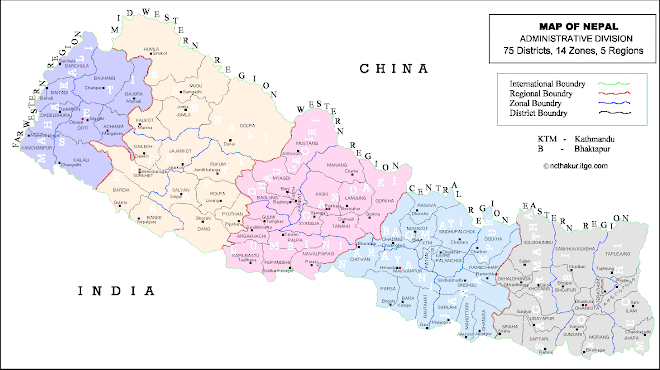
Map of Nepal

Map of Nepal

Wednesday, April 6, 2011

वित्तीय क्षेत्रको जोखिमका कारण र निदान

वित्तीय क्षेत्रको जोखिमका कारण र निदान

कान्तिपुर चैत्र २२, २०६७

प्रकाशकुमार श्रेष्ठ

चैत्र २१ -
हालका दिनहरूमा वित्तीय क्षेत्रले एकपछि अर्को झड्का व्यहोरिरहेको छ । नेपाल विकास बैंक खारेज भइसकेको छ भने सम्झना फाइनान्स कम्पनीको खारेजी प्रक्रिया सुरु भएको छ । युनाइटेड विकास बैंक र गोर्खा विकास बैंकलाई समस्याग्रस्त घोषणा गरिएको छ । गोर्खा विकास बैंकलाई समस्याग्रस्त घोषणा गरिएपछि आत्तिएका निक्षेपकर्ता एकैचोटी आफ्नो बचत निकाल्न लाइन लागेको देखियो । यी घटनाले विकासको क्रममा रहेको यस क्षेत्रमा धक्का पुग्ने र जनविश्वास गुम्नेतर्फ ध्यान दिनुपर्ने देखिन्छ ।

सन् १९८० को मध्यतिरबाट नेपालले आर्थिक उदारीकरणको नीतिसँगै वित्तीय उदारीकरण पनि सुरु गर्‍यो । त्यसभन्दा अगाडि सरकारी क्षेत्रमा मात्रै बैंक तथा वित्तीय संस्था खोल्न सकिने प्रावधान थियो । बैंकिङ कारोबार र ऋण लिन सरकारी स्वामित्वका वित्तीय संस्थाहरूको विकल्प थिएन । बैकिङ सेवा आवश्यकताभन्दा पनि विलासिताको वस्तुजस्तो थियो भने बैंक ऋण लिन त ठूलै पहुँच चाहिने गथ्र्याे । त्यतिखेरको राजनीतिक हस्तक्षेप र व्यावसायिकताको अभावमा यी संस्थाहरूको वित्तीय स्थिति अझै कमजोर छ ।

वित्तीय उदारीकरणले गर्दा विदेशी लगानीकर्तामात्र होइन, घरायसी निजी क्षेत्र पनि वित्तीय क्षेत्रमा लगानी गर्न हौसियो । सन् १९९० दसकको सुरुका वर्षसम्म नेपालको निजी क्षेत्रले बैंक तथा वित्तीय संस्था खोल्ने त्यति आँट गरेको थिएन, उनीहरू गलैंचा र तयारी पोसाकतर्फै केन्दि्रत थिए । यसले गर्दा २०४९ असार मसान्तसम्म नेपालमा पाँचवटा वाणिज्य बैंक, दुइटा विकास बैंक र एउटामात्र वित्त कम्पनी थिए । ०५० सालपछि नेपालको वित्तीय क्षेत्रले फड्को मार्न थाल्यो । आर्थिक वर्ष ०५०-५१ मा एकै वर्ष २० वटा वित्त कम्पनीहरू खुले । यति धेरै वित्तीय संस्था एउटै वर्ष खुलेको त्यो पहिलोचोटी थियो । त्यसपछिका वर्षहरूमा पनि निजी क्षेत्रले वित्तीय क्षेत्रतर्फ चासो बढायो । सुरुमा संयुक्त लगानी र निजी क्षेेत्रमा खुलेका बैंक तथा वित्तीय संस्थाहरूले छोटो समयमा गरेको प्रगति र नाफाले अन्य लगानीकर्तालाई पनि यसतर्फ आकषिर्त गर्‍यो । यसै समयमा बाह्य उदारीकरणले उत्पादनमूलक क्षेत्रमा प्रतिस्पर्धा गुम्दै गएको स्थितिमा राजनीतिक संक्रमण सुरु भएपछि नेपालका उद्यमी एवं व्यापारी वर्गका लागि वित्तीय क्षेत्र आकर्षकको केन्द्र बन्यो । यसले गर्दा वर्षेनि वित्तीय संस्था थपिँदै गए ।

२०६२-६३ को दोस्रो जनआन्दोलनपछि आएको राजनीतिक परिवर्तनपश्चात यो क्षेत्रको विस्तार अझ बढ्यो । नेपाल राष्ट्रबैंकले वित्तीय संस्था स्थापनाका लागि चाहिने चुक्ता पुँजी मनग्यै बढाउँदा पनि यी संस्था खोल्ने क्रम रोकिएन । यसपछि करिब ५ वर्षको अवधिमा १३ वटा वाणिज्य बैंक, ५९ वटा विकास बैंक, नौवटा वित्त कम्पनी र १० वटा लघुवित्त विकास बैंक थपिए । चालु आर्थिक वर्षमा मात्र १६ भन्दा बढी वित्तीय संस्थाहरू जन्मिए । यसरी उदारीकरणमा फस्टाएको प्रमुख क्षेत्रका रूपमा देखापरेको वित्तीय क्षेत्रले करिब २० हजार जनालाई रोजगारी र कुल गार्हस्थ्य उत्पादनमा चार प्रतिशतजतिको योगदान दिएको छ ।

जनसांख्यिक हिसाबले हेर्दा बैंक तथा वित्तीय संस्थाको संख्या नेपालमा अझै पुगेको छैन । बैंक तथा वित्तीय संस्थाको प्रतिशाखा करिब २५ हजार जनसंख्या देखिन्छ, जुन अरू देशको तुलनामा अझै बढी हो । तर पनि सहरकेन्दि्रत वित्तीय क्षेत्रको विस्तारले अहिले सहरी क्षेत्रमा बैंक तथा वित्तीय संस्थाहरूको उपस्थिति बाक्लै छ र यिनीहरू धानिन कठिन हँुदै गएको देखिन्छ । विगत एक-दुई वर्षदेखि यस क्षेत्रले विभिन्न झड्काको सामना गरिरहेको छ । समय-समयमा तरलता अभावबाट गुजि्रनुपरेको छ भने वित्तीय संस्थाहरू क्रमशः समस्यामा पर्नथालेका छन् । निस्त्रिmय कर्जाको अनुपात समग्रमा बढ्न थालेको छ । कतै अब वित्तीय संस्थाहरू नेपालको अर्थतन्त्रले धान्न नसक्ने स्थितिमा पुगेका हुन् कि ?

वित्तीय क्षेत्रको रफ्तारअनुरूप नेपालको अर्थतन्त्र बढ्न नसकेको पक्कै हो । ऊर्जा संकट, बिग्रँदो औद्योगिक सम्बन्ध र बढ्दो बाह्य प्रतिस्पर्धाले गर्दा नेपालका उद्योगधन्दाहरू संकुचित हुँदै गएका छन् । व्यावसायिक हुन नसकेको कृषि क्षेत्र मौसममा आधारित छ भने राजनीतिक संक्रमणकालले गर्दा सेवा क्षेत्रले पनि आशातित गति लिन सकिरहेको छैन । यस अवस्थामा वित्तीय क्षेत्रको दिगोपन निश्चित रूपमा जोखिममा छ ।

यसबाहेक संस्थागत सुशासनको अभाव, अर्ध-सार्वजनिक प्रकृतिको वित्तीय क्षेत्रलाई व्यक्तिगत कारखानाजस्तो ठान्ने प्रवृत्ति, गुणस्तरीय जनशक्तिको अभाव र छोटो समयमै व्यक्तिगत फाइदा लिइहाल्ने गैरसंस्थागत संस्कृतिले गर्दा नै यो क्षेत्रमा समस्या देखापर्न थालेका हुन् । निजी क्षेत्रको 'भेडा प्रवृत्ति' पनि समस्याको एउटा जड हो । नवीनताको अभाव र नटुंगिने राजनीतिक कचिंगलमा उत्पादनमूलक क्षेत्रमा जोखिम नलिई सहज सजिलो नाफाको खोजीमा अन्धाधुन्द नक्कल गर्नु नेपालको गलैंचा र तयारी पोसाक धराशायी हुनका एउटा कारण थियो । संरक्षणमा मात्र अस्तित्व खोज्ने निजी क्षेत्रले परिवर्तित समयअनुसार आफूलाई सक्षम नपारी कुनै एक क्षेत्रमा राम्रो देखेमा त्यसैको पछाडि कुद्ने स्वभावबाट पीडित छ । अहिले यही प्रवृत्ति वित्तीय क्षेत्रतर्फ पनि सल्केकाले यो क्षेत्रमा जोखिम बढेको हो ।

वित्तीय संस्थाहरू नाफाको स्रोत के हो भन्नेबारे प्रस्ट हुनुपर्छ । नाफाको मुख्य स्रोतका रूपमा कर्जाको ब्याज नै हो । निक्षेप परिचालन गरी कर्जा प्रवाह गर्दा तरलता जोखिमदेखि कर्जा जोखिमसम्मलाई ध्यान दिनुपर्ने हुन्छ । लिएको कर्जाबाट नाफा भएमात्र ऋणीले कर्जा भुक्तानी गर्नसक्ने हो । नेपालमा अहिले उत्पादनशील लगानी बढ्ने उपयुक्त वातावरण छैन, तर नाफाको लागि छट्पटिएका हाम्रा वित्तीय संस्था उत्पादन नगरी नाफा आउने जोखिमपूर्ण लगानी गर्न तल्लिन छन् । नोक्सानी भए निक्षेपकर्ता र साना सेयर लगानीकर्ताको हुने नाफा भए ठूलो अंश आफ्नै हुनेहँुदा वित्तीय संस्थाका सञ्चालक र कार्यकारी प्रमुखहरू जोखिम लिन डराएको देखिँदैन ।

वित्तीय संकट आउन नपाओस् भनेर वित्तीय क्षेत्रलाई उदारीकरणमा पनि धेरै हदसम्म नियमन र सुपरीवेक्षणमा राख्ने गरिन्छ । केन्द्रीय बैंकबाट इजाजत लिई यसैको नियमन र सुपरीवेक्षणमा रहने हुनाले यी संस्थाहरूमा जनविश्वास रहेको ठानिन्छ । तर सुपरीवेक्षण कार्य वित्तीय संस्थाहरूले उपलब्ध गराएको तथ्य र तथ्याङ्कमा आधारित हुने र समस्याको पहिचान, निर्णय र कार्यान्वयन गर्न समय लाग्ने गरेको छ ।

अर्कोतर्फ वित्तीय सुधारका क्रममा जनशक्तिमा गरिएको भारी कटौतीले केन्द्रीय बैंकको निरीक्षण र सुपरीवेक्षणीय क्षमता, वित्तीय क्षेत्रको विस्तारअनुरूप हुनसकेको छैन । निजी क्षेत्रले कुशलतापूर्वक आफैं काम गर्न सक्छ भन्ने मान्यताले गर्दा सरकारी नियमन तथा नियामक निकायलाई साँघुरो पार्ने उदारीकरणको प्रवृत्ति नै वित्तीय संकट ल्याउने मुख्य कारणका रूपमा देखिने गरेको छ । वित्तीय क्षेत्र आफैंले नाफा सिर्जना गर्ने क्षेत्र नभई कर्जा प्रवाह गरेर अन्य क्षेत्रले गरेको नाफाको अंशियारको रूपमा रह्ने क्षेत्र हो । तसर्थ यसको दिगोपना अन्य क्षेत्रको सफलतामा भर पर्छ । केन्द्रीय बैंकले अल्पकालीन सञ्चालन विकृति रोक्ने प्रयासमात्र गर्नसक्ने देखिन्छ । यसक्रममा बढ्दो जोखिमलाई मध्यनजर राखेर अन्य धेरै देशमा जस्तै नेपालमा पनि हालै दुई लाखसम्मको निक्षेप बिमा सुरु गरिएको छ । साना निक्षेपकर्ताहरूको निक्षेप सुरक्षित गरी यसले धेरै हदसम्म वित्तीय स्थिरता कायम गर्न सहयोग पुर्‍याउने अन्य देशको अनुभवले देखाए पनि तीव्रदरमा वित्तीय संस्थाहरूको वित्तीय स्थिति बिगँ्रदै जाने हो भने भर्खर सुरु गरेको निक्षेप बिमाले मात्र समस्या समाधान दिन सक्दैन ।

यस अवस्थामा राजनीतिक संक्रमणमा सुधार भई अर्थतन्त्रले गति नलिउन्जेल उदारीकरणको नीतिविपरीत भए पनि नयाँ वित्तीय संस्थाको स्थापनामा रोक लगाउनुपर्ने देखिन्छ । भएका वित्तीय संस्थालाई सुदृढीकरणका लागि केही समय दिन आवश्यक छ । अन्यथा बजारको अदृश्य हातले नेपालका केही वित्तीय संस्था बढारिन गई यस क्षेत्रप्रति जनविश्वास घटेर अर्थतन्त्र थप प्रताडित हुनसक्छ । तसर्थ वित्तीय क्षेत्रमा संलग्न हर्ताकर्ताले यसको प्रकृति बुझ्ने र वित्तीय ठग प्रवृत्तिलाई रोक्ने काम गर्नुपर्छ ।

नेपाल राष्ट्रबैंकका उपनिर्देशक श्रेष्ठ हाल न्युयोर्कको न्यु स्कुल अफ सोसल रिसर्चबाट विद्यावारिधी गर्दैछन् ।

प्रकाशित मिति: २०६७ चैत्र २२ ०७:४८

Wednesday, March 23, 2011

खस्कँदो सेयरबजारको आर्थिक प्रभाव


खस्कँदो सेयरबजारको आर्थिक प्रभाव (कान्तिपुर)


प्रकाशकुमार श्रेष्ठ

चैत्र ९ - दु ई वर्षअगाडि उर्लेको सेयरबजार अहिले दैनिक तल झर्ने क्रमले गर्दा धेरै लगानीकर्तालाई चिन्ताको विषय भएको छ । शान्ति प्रक्रिया सुरु भएपछि पछिल्लोपटक २०६३ मा बढ्न थालेको नेपालको सेयरबजार, २०६५ भदौ १५ गते उच्च विन्दुमा -नेप्से सूचकांक ११७५) पुगी घट्न थाल्यो जुन अझै कायम छ । अहिले नेप्से सूचकांक ३९० भन्दा तल झरेको छ । यसको कारण र आर्थिक प्रभावको समसामयिक विश्लेषण गरी नीतिगत निर्णय हुनुपर्ने देखिन्छ ।

शान्ति प्रक्रियाको सुरुवातसँगै नेपालमा राजनीतिक स्थिरता कायम हुने अपेक्षा गरी लगानीकर्ताहरू सेयरबजारतर्फ लागे । यही बेला बैंक तथा वित्तीय क्षेत्रको विस्तार तीव्रत्तर भयो । अन्य क्षेत्रमा लगानीको सम्भावना नरहेकाले बैंक तथा वित्तीय संस्थाहरूले पनि सेयर खरिद गर्न सेयरको धितोमा यथेष्ट कर्जा प्रभाह गरे । यसै समयमा बढ्दै गएको विप्रेषण आप्रवाहले गर्दा बैंकिङ क्षेत्रमा अत्यधिक तरलता ल्याएकाले पनि सस्तो ब्याजदरमा कर्जा उपलब्ध भयो । यही न्यून ब्याजदरले गर्दा बैंकमा रकम राख्नुभन्दा सेयर खरिद गर्नु फाइदाजनक देखियो । सेयरबजारप्रति एक किसिमको उत्साह र जागरण आयो । यस क्रममा केही चलाख लगानीकर्ताहरू करोडौं कमाउन सफल पनि भए ।

२०६३ चैतमा राष्ट्र बैंकले बैंक तथा वित्तीय संस्थाहरूका लागि न्यूनतम चुक्ता पुँजी दोब्बर वृद्धि गर्ने निर्देशनले हकप्रद र बोनस सेयर पाइने देखेर पनि लगानीकर्ता बैंक तथा वित्तीय संस्थाको सेयर खरिद

गर्न हौसिए ।

नेपालको सेयरबजार अनौठोखालको छ । सेयरबजार पुँजी परिचालन गर्ने बैंकिङ क्षेत्रको विकल्पका रूपमा रहनुपर्ने हो । तर नेपालको सेयरबजारमा बैंक तथा वित्तीय क्षेत्रकै बाहुल्य छ । उदाहरणका लागि २०६७ पुस मसान्तमा सेयरबजारमा सूचीकृत १९५ वटा कम्पनीमा १६५ वटा -८५ प्रतिशत) बैंक तथा वित्तीय संस्थाहरू नै छन् । यस किसिमकोे हाम्रो सेयरबजार उकालो चढ्दा पनि यसले नेपालको वास्तविक आर्थिक स्थितिलाई प्रतिबिम्बित गरेको थिएन भने ओरालो झर्दा पनि वास्तविक क्षेत्रमा भद्रगोल नै ल्याएकोे स्थिति छैन । लम्बिँदै गएको राजनीतिक अन्योलले र सुधि्रन नसकेको शान्ति सुरक्षाले गर्दा आफैं नेपाली अर्थतन्त्र पहिलेदेखि नै जकडिएको छ ।

राष्ट्र बैंकले २०६५ सालमा मार्जिन कर्जामा गरेको कडाइ, सोही समयमा विश्वव्यापी वित्त संकटले गर्दा विप्रेषण आप्रवाहको वृद्धिमा आएको कमी र आयातमा भएको तीव्र वृद्धिले गर्दा तरलतामा आएको अभावले सेयर खरिद गर्न सहज कर्जा उपलब्ध हुन छोडेपछि सेयरको माग घट्न थाल्यो । गन्जागोल राजनीतिक परिवेश र समयमा संविधान जारी हुन नसकिरहेको अवस्था त छँदै छ । सेयरको बढ्दो मूल्यलाई मध्यनजर राख्दै यसको कारोबारमा पँुजीगत लाभ कर लगाइयो भने स्वयं आयकर घोषणालाई कडाइसाथ लागू गरियो । यी सबै कारणले सेयरको माग घटायो ।

यसै समय सेयरको आपूर्तिमा भने बढ्योे । नेपाल टेलिकम र कृषि विकास बैंकले ठूलो मात्रामा प्राथमिक सेयर जारी गरे । नयाँ बैंक तथा वित्तीय संस्थाहरू स्थापना हुने र सेयर जारी गर्ने क्रम पनि रह्यो । बैंक तथा वित्तीय संस्थाहरूको ७० प्रतिशत संस्थापक सेयरमध्ये १९ प्रतिशत साधारण सेयरमा परिणत गर्न सक्ने प्रावधानले पनि साधारण सेयरको प्रवाह बढ्न गयोे । यी सबै माग र आपूर्तिका कारणहरूले समग्र रूपमा सेयरबजारलाई ओरालो लगायो ।

सेयरबजारमा उत्पादन तथा सेवामूलक कम्पनीहरूको उपस्थिति न्यून रहेको र सेयरबजारमार्फत पँुजी परिचालन हुन नसकिरहेको अवस्था

छ । केही वर्षदेखि राजनीतिक अन्योल र अस्थिरताले गर्दा सदैव कमजोर रहेको नेपाली अर्थतन्त्रलाई अहिलेको खस्कँदो सेयरबजारले आफैं समष्टिगत रूपमा खासै असर पारेको र पार्ने देखिँदैन । तर पनि तीव्रदरमा घटेको सेयरबजारले केही क्षेत्रमा भने पक्कै धक्का दिएको र दिन सक्ने देखिन्छ ।

खासगरी केही लगानीकर्ताहरूको सेयरबजारबाट छिट्टै धनी हुने सपनामा चोट पुगेको छ । सेयरबजार वास्तवमा सट्टेवाजहरू पनि चलखेल गर्न सक्ने प्रमुख थलो हो । सेयरबजारमा आउने अथवा ल्याइने अनावश्यक उतारचढावबाटै केही टाठाबाठाहरूले फाइदा लिने मौका पाउँछन् । दुई वर्षअगाडि सेयरको मूल्य बढ्दा केही सीमित व्यक्तिहरूले फाइदा लिँदै धेरै सर्वसाधारणलाई लोभ्याउन सफल भए । अहिले सेयरबजार झर्दा खासगरी घाटा बेहोर्ने चाहिं पछिल्लोचोटि सेयरबजारमा प्रवेश गर्ने सर्वसाधारण नै बढी मात्रामा रहेको हुनुपर्छ । घरजग्गा बिक्री गरेर र विदेशमा कमाएको पैसा सजिलै दोब्बर पार्न देखासिखी गर्दै सेयरबजार प्रवेश गरेका नवसिकारु नै अहिले बढी प्रताडित भएको उदाहरण पाइएको छ ।

सानो भईकन पनि छोटो समयमा सेयरबजारमा देखिएको उतारचढावले गर्दा नेपालको सेयरबजारको वास्तविक विकासमा नराम्रो धक्का लाग्ने देखिन्छ । उत्पादन तथा सेवामूलक उद्योगधन्दाहरूको विकास तथा विस्तारका लागि पँुजी परिचालन गर्ने सशक्त माध्यमका रूपमा विकसित हुनुपर्ने सेयरबजार अहिलेको उधोगतिले नराम्ररी प्रभावित हुने देखिएको छ ।

सेयरबजार खस्कँदै जाँदा सेयरबजारतर्फ हुने लगानी अन्यत्र मोडिने हुन्छ । सेयरबजार खस्केकाले नै घरजग्गा र आवासीय घर तथा व्यावसायिक भवनतर्फ लगानी तथा बैंक कर्जा बढ्न गएर घरजग्गाको मूल्य अकासिन गयो । घरजग्गाको मूल्यवृद्धिले वित्तीय अस्थिरता ल्याउन सक्ने सम्भावनालाई मध्यनजर राख्दै गएको आर्थिक वर्ष २०६६/६७ मा राष्ट्र बैंकले घरजग्गा कर्जाको सीमा घटाएर कडाइ गर्‍यो ।

सेयरबजार ओरालो लाग्दा अर्को प्रभावका रूपमा सुन आयात बढेको देखियो । आर्थिक वर्ष २०६६/६७ मा ऐतिहासिक रूपमा रु. ४२ अर्बको सुन आयात भयो । सुनको मूल्य बढिरहेकाले उक्त सुन आयातको केही अंश लगानीका लागि भएको हुन सक्छ । उच्च सुन आयातले गर्दा शोधनान्तर घाटामा गयो । यसलाई रोक्न सुनको आयातमा कडाइ

गरियो भने मौदि्रक नीति पनि कडा पारियो । फलस्वरूप, ब्याजदर बढ्यो र सेयरबजारमा लगानी थप घट्यो ।

सेयरबजारको मूल्यमा कमी आउँदा सेयरहोल्डरहरूको सम्पत्तिमा ह्रास आई मागमा कमी आउने सम्भावना पनि रहन्छ । तर, नेपालमा माग बढ्दा आन्तरिक उत्पादित वस्तु खासै नबढ्ने हुँदा बरु सेयरबजारको ह्र्रासले आयात घटाउन सहयोग पुग्ने देखिन्छ । तर, कुल सम्पत्तिमा सेयरको अंश खासै ठूलो नभएको अवस्थामा यस किसिमको सम्पत्ति प्रभाव त्यति सशक्त नहुन सक्छ । सेयरमूल्य लगातार झर्दै जाँदा लगानीकर्ता हतोत्साही भई अप्रत्यक्ष रूपमा पुँजी पलायन बढ्ने देखिएको छ ।

सेयरबजारमा मूल्य उच्च रूपमा बढ्नु र घट्नु राम्रो होइन, तर सेयरबजार, खासगरी दोस्रो बजारमा हुने उतारचढावबाट नै कसैले आम्दानी गर्ने गर्छन् । त्यसैले टाठाबाठा सेयर लगानीकर्ताले सेयरबजारमा आफ्नो अनुकूल सेयर मूल्यलाई तलमाथि गराउन उद्यत भइरहने हुँदा नै विश्वभरिकै सेयरबजार स्थिर रहने गरेको पाइँदैन । पछिल्लो समयमा प्रवेश गरेका त्यसमा पनि ऋणमा सेयर खरिद गरेका सेयर लगानीकर्ताहरू आतिएको अवस्था र मूल्य ज्यादै न्यून भइसकेको हुँदा केही चनाखा सेयर लगानीकताहरूले यस अवस्थाको पुनः फाइदा लिने गरी सेयरबजारलाई उकास्ने सम्भावना पनि छ । तर यसका लागि राजनीतिक परिदृश्यमा केही सुधारको संकेत चाहिं देखिनुपर्छ ।

अन्तमा, पुँजी परिचालनको सशक्त माध्यमका रूपमा विकास हुन सक्ने हुनाले सेयरबजारलाई भताभुंग हुन भने दिनु हँुदैन । मार्जिन कर्जामा केही खुकुलो पार्दै, गैरआवासीय नेपालीलाई सेयरबजार खोल्दै, उत्पादनमूलक उद्योगधन्दालाई सेयरबजार प्रवेश गराउँदै जाने नीति लिई यसको कार्यान्वयन गर्नुपर्ने देखिन्छ । मुख्यतः राजनीतिक स्थिरता कायम भई आर्थिक गतिविधि बढ्दै गएमा सेयरबजार केही समयमा नै उकालो लाग्न सक्छ ।

लेखक न्युयोर्कस्थित न्यु स्कुल अफ सोसल रिसर्चमा विद्यावारिधि गर्दै छन् ।

प्रकाशित मिति: २०६७ चैत्र ९ ०८:५७

Saturday, January 22, 2011

Article on Alternative perspective on Economic Development

The Kathmandu Post (Jan 23, 2011)

Oped»

No invisible hands here

Kalpana Khanal, Prakash Kumar Shrestha
KATHMANDU, JAN 22 -
Nepal is now at a historical juncture of exploring a new path for economic development and peace building. In addition to the political agenda, economic issues should get space to shape the path of long-awaited and elusive economic development in Nepal.

Even after more than three decades of state-led development efforts and more than two decades of market-based economic policies, Nepal is still at the bottom of the development ladder with widespread poverty and unemployment. The economic liberalisation process initiated from the mid-1980s pushed the country into a decade-long internal armed conflict in 1996, resulting in a fragile political system. With the initiation of the peace process in 2006 and the declaration of a republic in 2008, Nepal is now recuperating from the shock of internal conflict, and in search of not only a new political system, but also a new way of attaining economic development.

Nepal initiated state-led development in 1956. However, after facing a balance of payments (BOP) deficit for three consecutive years in the first half of the 1980s, Nepal adopted an economic liberalisation process by implementing Structural Adjustment Programme in the mid-1980s. Then it pursued the International Monetary Fund and the World Bank’s prescription based on the Washington Consensus. Economic liberalisation policies embraced include privatisation of state-owned enterprises, market-determined price system, trade liberalisation, financial sector liberalisation and fiscal consolidation.

Consequently, Nepal has become one of the most liberalised countries in South Asia. On the contrary, economic performance has been dismal with low economic growth and denigrated living standards. It can be claimed that the economic liberalisation process has eroded the industrialisation base and ignited deindustrialisation of the Nepali economy. While Nepali markets have been flooded with imported goods, the capacity to compete in the exports market has not been strengthened.

Despite the implementation of three structural adjustment programmes and one Poverty Reduction and Growth Facility (PRGF) programme, Nepal still ranks 193rd in the world, with a per capita GDP of US $470. To the surprise of many market proponents, in the middle of implementation of the economic liberalisation process, Nepal plunged into the internal armed conflict in 1996 fuelled by an army of the deprived and unemployed. Neo-liberalisation policies mainly focused on macroeconomic stability, bypassing employment generation and poverty alleviation under the false belief of a trickle down effect.

Nepal was at par with East Asian economies like South Korea, Malaysia, Singapore and Thailand in the 1960s. The development gap widened in subsequent years, thus falsifying

the notion of neo-classical convergence proposition. Nepal still faces problems of limited productive land base, a landlocked location, dismal industrialisation, a weak export base, low per capita GDP growth, and a slow transition from a subsistence agricultural economy. The share of agriculture in GDP is still 35 percent and provides employment for two-thirds of the population, but not enough food to feed the whole country.

More importantly, Nepal is one of the lowest per capita consumers of commercial energy—a very critical indicator of industrial and urban development. Nepal has been passing through unprecedented energy crises for the last few years, facing power outages of up to 12 hours every day. As a consequence of this and prolonged political transition, investment has been low resulting in stagnant economic growth. This has also compelled a massive exodus of youth for foreign employment. It is hard to imagine that industrialisation will bring economic growth and development amidst the acute energy crisis. This situation is partly the result of neo-liberal policies of more than the past two decades that minimised the role of government in infrastructure building with hopes that a market-led economy will work through invisible hands to bring market equilibrium.

The developmental experiment in Nepal, and many studies done elsewhere, confirm that market-based development strategies alone do not work in countries like Nepal. On the same note, Chang and Grabel (2004) have suggested three reasons why the Washington Consensus is not desirable. First, the economic policies associated with the neo-liberal agenda have failed to achieve their chief goals and the cost of this failure has done serious harm to the developing world. Second, historical and current evidence supports multiple routes to development. In reality, most of the policies used by successful countries run counter to the policies advocated by neo-liberal economists today. Third, in the face of such evidence, some of those most closely associated with the Washington Consensus (and with neo-liberal policies) have recently attempted to modify their positions.

In this context, it is now necessary to recognise Karl Polanyi’s view that institutions, governance and distribution matter. In the preliminary stage of development, the government should be instrumental in bringing the economy onto a path of development. The state can fail in many dimensions, but as Polanyi (1944) emphasised, it is the central economic actor.

We should ignore the ‘one size fits all’ notion of economic liberalisation policy. In reality, the appropriateness of any particular policy depends on specific national conditions, such as resource endowments, the scarcity of foreign exchange, proximity to key markets, social and political conditions, and so on. Therefore it has to be a genuine task of emerging economists, politicians and policy makers to come up with alternative ideas and to promote feasible alternative policies that already exist in order to enhance rapid economic development that is equitable, stable and sustainable. The poor living in developing countries like Nepal deserve concrete development strategies that can guarantee decent jobs and provide basic infrastructure in the 21st century, not only piles of glossy reports that describe their plight with colourful pictures.


Khanal is a PhD student at the University of Missouri, Kansas City and Shrestha is a PhD student at the New School for Social Research, New York City)


kalpana khanal Prakash Kumar Shrestha

Monday, January 17, 2011

Article on Controlling Inflation

Breaking the bank

PRAKASH KUMAR SHRESTHA

Published on January 17, 2010

Recently, people have shown concern over the relatively high inflation in Nepal. After having low inflation averaging 3.6 percent from 2000 to 2005, inflation began to rise and reached levels as high as 13.2 percent in the fiscal year 2008/09, before sliding down to 10.5 percent in 2009/10. Recent data published by Nepal Rastra Bank (NRB) showed that as of mid-November 2010, annual inflation was 8.4 percent. In the news media, NRB has been blamed for not controlling inflation (see TKP Dec. 06, 2010, Fighting Inflation).

The NRB Act 2002 has clearly entrusted the NRB with the job of maintaining price stability and balance of payments (BOP) consolidation (external sector stability) through monetary policy, being fully influenced by the neo-classical notion of inflation determination. The belief that monetary policy can determine inflation is based on the Quantity theory of money. This is a closed-economy theory where money supply is proportionally related to price level if the economy is in full employment.

Another theory, the monetary approach to balance of payments in an open economy, shows the relation between money supply and balance of payments (BOP). In fact, both relations work when money is used solely for transaction purposes—where any finance motive is completely ignored. In other words, such a direct relationship only exists, for instance, when a helicopter drops a bounty of money in a place with no existing financial institutions. Though it may be common for people to blame the NRB after looking at the NRB Act 2002, a closer look at the determinants of inflation in countries like Nepal reveals that these notions of neo-classical inflation determination do not work. Criticism of the NRB is not enough to contain inflation.

In 2009, an expansion of monetary aggregates seems to have been accompanied by higher inflation, but a long-run relationship between the two is not strong in Nepal. Many empirical studies in Nepal have shown a weak relationship between money supply and price levels. Rather, inflation in Nepal is impacted primarily by inflation development in India on account of geographical proximity and the pegged exchange rate regime.

Despite the fact that inflation distorts price signals and leads to resource misallocations, Friedman’s hypothesis that inflation is always a monetary phenomenon may not be true—supply and cost play an equally important role in determining economic inflation. According to the heterodoxy school of thought, inflation does not necessarily have a monetary origin. In this context, post-Keynesians prefer to utilise income policy to control inflation taking into consideration cost-push inflation and the wage-price spiral.

The Nepali economy is at a historical crossroads—passing through a prolonged political transition it currently lacks an investment-friendly environment. Once we look at the disruptions to continuous supply caused by a series of strikes and blockades, low production, the energy crisis and so on, it is not strange to see high inflation in Nepal. Luckily, we haven’t experienced hyperinflation as has been observed in Latin American countries. The highest inflation recorded in Nepal was 21.2 percent in 1991/92 as the economic liberalisation process gained momentum. Given the structure of our economy—low industrialisation and rain-fed agriculture production—containing inflation to less than five percent is hard enough.

How can monetary policy bring down inflation? Following the neo-classical principle, one could argue for increasing interest rates or sucking up liquidity to lower the growth of money supply in the economy. Since last year, interest rates have already risen substantially and pleading for a further

rise in interest rates to combat inflation would be a disaster for the economy. Some productive areas like hydropower construction have already

faced growing production costs due to rising interest rates, with increasing challenges in obtaining credit. It seems this may protract the period of dark-ages in Nepal.

Moreover, sucking up liquidity to tighten the monetary policy will further aggravate the liquidity crunch, which the banking system has been facing for over a year. If the interest rate continues to grow, it may lead to a financial crisis through loan defaults and insolvency. Arguing for a tight monetary policy rests on the false belief that no economic agent ever defaults. As the land prices slide and transactions slow with rising interest rates, borrowers will certainly begin to default on their loan payments, sending a ripple effect across the financial sector.

One cannot deny that an attempt to lower inflation by raising interest rates may itself have an inflationary and redistributive effect. Rising interest rates may promote inflation, especially when firms are highly indebted, by increasing the cost of production. A tight monetary policy will increase the income received by the financial sector at the expense of the indebted sector.

In this situation, monetary policy alone is not enough to curb inflation. But it can be controlled to some extent by ensuring the smooth supply of goods and by strengthening agricultural production, which requires effective law and order and a strong government support system. However, such an effective governance system is not likely in the near future. Since people have a disinterest in agricultural activities, monetary policy does not seem to control impending further inflation, which is going to be emanating from globally rising food prices. Having lower inflation in Nepal will remain an illusion. Any improvements will require a joint effort from all stakeholders.

Shrestha is a PhD student at The New School for Social Research, New York

Monday, December 6, 2010

Article on CEO's pay

Through the roof

Nepal Rastra Bank (NRB) recently released guidelines to regulate the remuneration of Chief Executive Officers (CEOs) of banks and financial institutions, four months after its initial announcement on the monetary policy. Despite protests by CEOs, NRB issued a circular, putting a cap on CEO salaries and perks. This has raised some eyebrows in the financial industry. Some CEOs argue that this type of regulation can deter talented people from joining the financial sector.

The NRB’s guideline, at least in part, may be a reaction to the recent US financial crisis, which began taking its toll in 2007. In their recent paper “Regulating Bankers’ Pay”, Bebchuk and Spamann argue that one of the reasons for the recent systemic crisis was the risk-taking behaviour of CEOs for their personal gains. Bank executives share gains that flow to common shareholders, but are insulated from losses resulting from their risky strategies. The NRB’s guidelines could partly be a response to such increasing risk-taking behaviours.

Nepal’s financial sector is in a fledgling state, but CEO pay and benefits have been skyrocketing in recent years in a similar fashion observed in developed countries. There has been a widening gap between the salaries and benefits of CEOs and the rest of the staff within the banking system. It has been reported that the salary of a CEO of a commercial bank has been as high as Rs. 2.1 million per month in addition to performance-based pay and other perquisites, while at the same time, the average salary of office assistants at banks is just Rs. 10,000. Market mechanisms do not validate such a rapidly widening gap and it is definitely a matter of concern.

Financial institutions are not like private industries, they are public institutions by nature. The ever-growing perks and salaries of CEOs tend to bring anomalies in the financial sector. Higher remunerations of CEOs require higher profits in the financial institutions, which may lead some CEOs to ‘cook their books’ and take part in ‘controlled fraud’. Returns and risks are positively related in finance. CEOs driven by personal benefits will take more risks and jeopardise the financial system. In today’s neo-liberal era, the existing

practice in the financial sector seems to follow a policy of ‘gain ours, lose yours’. The NRB’s recent guidelines do not take sufficient measures to prevent such practices, however.

There is no disagreement that compensation should fairly reflect the contributions made by a person. However, the profits of a financial institution do not depend solely upon the CEO. The rest of the staff makes important contributions for the growth of the institution as well, which often gets overlooked when it comes to proportional compensation. Although it is justified for a CEO to get compensated based on his/her performance, the existing pay-scale structure in the Nepali financial sector cannot be explained even by the neoclassical wage theory.

Amidst the expansion of financial institutions managed by highly paid CEOs and opening of new branches, a bitter ‘financial paradox’ can be observed in Nepal because of limited access to formal financial services. Another important point to consider here is that the mushrooming finance cooperatives have been siphoning off a large chunk of banking business from formal financial institutions. However, this has been grossly ignored by the highly-paid, talented CEOs.

Despite the hue and cry, current regulations by the NRB have not barred CEOs from receiving their existing lofty salaries and benefits. This new regulation has just set some limits by categorising salary and benefits into three headings: fixed annual remuneration, performance-based pay and other perquisites. Fixed annual remuneration is capped at 5 percent of the average staff expenses over the last three years or 0.025 percent of the total assets in the previous year, whichever is lower. Other provisions include bonuses as per the Bonus Act, and any other performance-based incentives should be counted in the fixed annual remuneration.

An important provision, however, is that if performance-based pay stands at more than 40 percent of the fixed annual remuneration, CEOs get that extra amount over the span of three subsequent years. Meanwhile, if the institution incurs losses in any of the upcoming three years, the differed amount goes back to the institution, not to the CEO. This is the only effective provision in the guideline that serves to check and balance the pay of CEOs and the financial health of the institutions.

Exempting existing salaries and fringe benefits from the new guidelines will affect only the upcoming financial institutions and any new appointments. Ironically, a cursory look at last year’s balance sheet of a few financial institutions reveals that the majority of the currently serving CEOs’ salaries and perks may fall well below the ceiling set by the NRB’s guidelines, thus reflecting the ineffectiveness of the provision. It is quite likely that talented CEOs may come up with risky financial innovations, like increasing staff expenses by raising salaries or hiring more employees, which could result in the ballooning of the institution’s assets by any means. Increasing staff expenses may inadvertently have a positive impact on employment creation and increased staff income, whereas increased assets, if properly checked by the NRB’s existing regulatory provisions, will result in an increase in financial access.

To sum up, the recent guidelines of the NRB on CEO’s pay is a small step towards maintaining financial stability. Nepal needs effective implementation of other regulatory measures such as consolidation of existing financial institutions, implementation of a deposit insurance scheme, effective capital requirements, leverage limits, liquidity ratio, and proper accounting standards for maintaining financial stability to keep up with the country’s expanding financial sector.


Published in the TKP on December 6, 2010. (jointly written with Kalpana Khanal, UMKC)

Wednesday, April 7, 2010

जोखिम उन्मुख बैंकिंगक्षेत्र

दृष्टिकोण»

कान्तिपुर
प्रकाशकुमार श्रेष्ठ
काठमाडौ, चैत्र २५ -
केही समयदेखि तरलताको अभाव खेप्दै आएको नेपालको बैंकिङ क्षेत्र थप जोखिमतर्फ उन्मुख देखिएको छ । चालु वर्षको सुरुवातदेखि नै तरलताको अभाव हुँदाहुँदै पनि बैकिङ क्षेत्रले तीव्र दरमा कर्जा प्रवाह गरिरहेकोे तथ्य नेपाल राष्ट्र बैंकले हालै प्रकाशित गरेको चालु आर्थिक वर्षको पहिलो छ महिनाको तथ्याङ्कमा देखिएको छ । नेपाली अर्थतन्त्रको वास्तविकतासँग नसुहाउने गरी तीव्र दरमा भएको कर्जा प्रवाह तरलता अभावको प्रमुख कारणका रूपमा रहेको देखिन्छ ।

चालु आर्थिक वर्षको पहिलो छ महिनामा नेपालका २६ वटा वाणिज्य बैंकहरूले खुद करिब २६ अर्ब रुपैयाँ मात्र निक्षेप संकलन गरे । तर, सोही अवधिमा करिव ६७ अर्ब रुपैयाँ ऋण प्रवाह गरे । गत वर्षको यसै अवधिमा स्थिति ठीक विपरीत थियो । यसरी ६ महिनाको अवधिमा निक्षेप संकलनभन्दा ४१ अर्ब रुपैयाँ बढी ऋण प्रवाह भएको देखिन्छ । यदि लिएको ऋण अर्थतन्त्रभित्र खर्च भएको छ भने ऋण प्रवाहसँगै निक्षेप पनि बढ्नुपर्ने होे । तर, नेपालको अहिलेको स्थिति त्यस्तो देखिँदैन ।

यसले के देखाउँछ भने बैंकिङ क्षेत्रबाट प्रवाहित ऋण नेपालभित्र खर्च भएको छैन । उक्त ४१ अर्ब रुपैयाँमध्ये २४ अर्ब रुपैयाँ जति चालु खाता घाटा पूरा गर्न खर्च भएको देखिन्छ भने साढे ११ अर्ब बराबरको रकम नेपाली अर्थतन्त्रमा नगदको रूपमा बढेेको देखिन्छ र बाँकी ६ अर्ब रुपैयाँको स्पष्ट खाका देखिँदैन तर यो बराबरको रकम गैर बैंकिङ च्यानलमार्फत् बाहिर गएको हुन सक्छ ।

लम्बिँदो राजनीतिक संकमणकाल, अस्तव्यस्त आर्थिक अवस्था, अधोगतिमा रहेका उद्योगधन्धाको स्थितिमा नेपालमा अहिले उत्पादनशील कर्जाको माग हुने कुनै सम्भावना छैन । राजनीतिक एवं आर्थिक जोखिम उच्च

छ । यस्तो अवस्थामा जोखिमपूर्ण क्षेत्रमा मात्र कर्जा माग हुन सक्छ तर पनि बैंकिङ क्षेत्रबाट तीव्र दरमा कर्जा प्रवाह भइरहेको छ । गत वर्षभन्दा झण्डै दोब्बर कर्जा प्रवाह गरिएको छ । कर्जा प्रवाह हुनु आफैमा नराम्रो होइन । कर्जा प्रवाहमार्फत् लगानीकर्तालाई लगानीयोग्य साधन उपलब्छ हुन्छ । कर्जा प्रवाहले लगानी बढाउन सहयोग पुर्‍याउँछ, फलस्वरूप उत्पादन र रोजगारीमा सकारात्मक असर पर्दछ । तर, अन्धाधुन्ध कर्जा प्रवाहले भने बैंकिङ प्रक्रियामा संकट ल्याई अर्थतन्त्रलाई तहसनहस पार्छ । विश्वमा अहिलेसम्मको अनुभवले के देखाएको छ भने वित्त संकटदेखि आर्थिक संकट ल्याउने काम उच्चदरको कर्जा प्रवाहले गर्दै आएको छ ।

नेपालका बैंकहरूले प्रवाह गरेको कर्जाको प्रकृतिले यिनीहरूको जोखिमलाई अझ बढी उजागर गरेको छ । क्षेत्रगत रूपमा भएको कर्जा प्रवाहलाई हेर्दा बैंकबाट प्रवाहित कर्जा उत्पादनशील क्षेत्रतर्फ छैन । कुल गाहस्थ्र्य उत्पादनमा एक तिहाइभन्दा बढी अंश ओगटेको कृषि क्षेत्रमा चालु आर्थिक वर्षको पहिलो ६ महिनामा कुल प्रवाहित कर्जाको शून्य दशमलव शून्य दुई प्रतिशतमात्र कर्जा प्रवाह भएको छ । सबैभन्दा बढी १४ अर्ब रुपैयाँ -२१ प्रतिशत) घरजग्गामा कर्जा प्रवाह गरिएको छ । त्यसपछि थोक तथा खुद्रा व्यापारमा करिब १२ अर्व रुपैयाँ -१७ प्रतिशत) कर्जा प्रवाह गरिएको छ । सबै खालका उद्योगधन्धामा गरेर करिब ८ अर्ब रुपैयाँ -१२ प्रतिशत) मात्र ऋण प्रवाह भएको छ । यसरी चालु आर्थिक वर्षमा रियल स्टेटतर्फ उच्च दरमा कर्जा प्रवाह भएको छ । सायद घरजग्गाको मूल्य सधैँ बढ्छ भन्ने मान्यताबाट प्रभावित भएको देखिन्छ जुन सधैँ सत्य हुँदैन ।

उच्च कर्जा प्रवाहले गर्दा नेपालका बैंकहरूको कर्जा निक्षेप अनुपात २०६६ असारमा ८१ प्रतिशत रहेकोमा २०६६ पुस मसान्तमा ८९ प्रतिशत पुगेको छ । जुन सामान्यत्या ७५ प्रतिशतभन्दा कम हुनु

पर्ने हो । यसको अर्थ हुन्छ सय रुपैयाँ निक्षेपमा ८९ रुपैयाँ कर्जा लगानी गरेका छन् । साढे पाँच रुपैयाँ नेपाल राष्ट्र बैंकमा अनिवार्य बचत गर्नुपर्ने हुन्छ । यसरी सय रुपैयाँ निक्षेपका लागि नेपालका बैंकहरूले औसतमा साढे पाँच रुपैयाँ लिएर दैनिक कारोबार गरिरहेका छन् । यसले गर्दा अलिकति निक्षेप संकलनमा कमी र समयमा कर्जा भुक्तानी नभएमा तरलतामा चाप परिहाल्ने स्थिति छ । जुन अहिले यी बैंकहरूले झेलिरहेका छन् ।

अहिले वाणिज्य बैंकहरूसँग नेपालीहरूको करिब ५ सय ७५ अर्ब ७६ करोड रुपैयाँ निक्षेप रहेको छ, जसमध्ये ३९ प्रतिशत मात्र मुद्धति निक्षेपमा छ । यसको मतलब ६१ प्रतिशत रकम बचतकर्ताले कुनै पनि बेला निकाल्न सक्ने स्थितिको छ । तर, यिनीहरूसँग कुल तरल सम्पति भने १ सय ६५ अर्व रुपैयाँ रहेको छ । यी सबै तथ्याङ्कले के देखाउँछ भने नेपालका बैंकहरू अर्थतन्त्र शिथिल रहेको अवस्थामा पनि नाफा कमाउने दौडमा लागेका छन् । सामान्यतया अल्पकालीन ऋण प्रवाह गर्नुपर्नेमा वाणिज्य बैंकहरू रियल स्टेट जस्तो दीर्घकालीन प्रवृत्तिको अनुत्पादनशील क्षेत्रतर्फ कर्जा लगानी बढाउनुले बंैकिङ क्षेत्रमा संकट आउने सम्भावना बढेर गएको छ ।

वास्तवमा अहिले नेपाली अर्थतन्त्रले धान्नै नसक्ने गरी वित्तीय क्षेत्रको विस्तार भइरहेको छ । वाणिज्य बैंक, विकास बैंक र वित्त कम्पनीबीचको भिन्नता साँघुरिँदै गएको छ । यसले गर्दा प्रतिस्पर्धा बढेको छ र नाफाको अवसर घटेको छ । सहरका चोकहरू बैंक तथा वित्तीय संस्थाका कार्यालयहरूले ढाक्न लागेका छन् । यस्तो अवस्थामा उच्च नाफा कायमै राख्न बैंकिङ क्षेत्र जोखिमपूर्ण क्षेत्रतर्फ लागेको देखिन्छ । तर, ऋण असुलीको फितलो कानुनी व्यवस्था र बढ्दो राजनीतिक संक्रमणकालले गर्दा ऋण असुली सहज छैन । यसले गर्दा खराब ऋणको मात्रा बढ्ने र बैंकिङ क्षेत्रमा संकट आउने सम्भावना प्रबल रहेको छ ।

वाणिज्य बैंकहरूको नाफाप्रेरित कर्जा लगानीले सिर्जना गरेको तरलता अभावलाई सम्बोधन गर्न नेपाल राष्ट्र बैंकले ४० अर्ब रुपैयाँ बराबरको अल्पकालीन तरलता प्रवाह गरिसकेको छ । तर, वाणिज्य बैंकहरू दीर्घकालीन प्रकृतिको ऋण लगानी गरी दीर्घकालीन प्रकृतिको तरलता अभावमा फसेकाले उक्त अल्पकालीन तरलता प्रवाहले तरलता अभाव घटाउन सकेको छैन । निक्षेप बिमा नभएको अवस्थामा वाणिज्य बैंकहरूले सर्वसाधारणको निक्षेपमा लिएको यो जोखिमपूर्ण यात्राले ठूलै संकट ल्याउने देखिन्छ । अन्य विकास बैंक र वित्त कम्पनीहरूको प्रवृत्ति पनि वाणिज्य बैंकहरूको भन्दा

खासै फरक छैन ।

घरजग्गामा गलत ढंगबाट कर्जा प्रवाह गरी ऋण असुली नहुँदा तरलताको अभावले लामो इतिहास भएका बादशाहरूपी अमेरिकी बैंकहरू तासको महलझैँ पतन भएको घटना अझै ताजै छ । यसबाहेक अमेरिकी वित्त संकटले गर्दा अहिलेसम्म साना-ठूला गरी १ सय ९६ वटा बैंकहरू बन्द भैसकेका छन् । नेपालका बैंकहरू अजम्बरी छन् भनेर भन्न सकिन्न । अहिलेको कर्जा प्रवाहको प्रकृति हेर्दा नेपालका अन्य बैंकहरूले पनि नेपाल विकास बैंकको जस्तो नियति भोग्न सक्ने सम्भावना बढेको छ ।

अमेरिकामा त निक्षेप बिमा प्रणाली भएकाले सर्वसाधारणको निक्षेप सुरक्षित रह्यो र निक्षेप निकाल्न लाइन लाग्नुपर्ने स्थिति आएन तर नेपालमा यस्तो स्थिति छैन । वाणिज्य बैंक, विकास बैंक र वित्त कम्पनीमा रहेको झन्डै ७ खर्ब रुपैयाँ बराबरको निक्षेपको भविष्य जोखिममा छ । यी संस्थाहरूको व्यवस्थापन सम्हालेर बसेका व्यक्तिहरूको हातमा छ । यस अवस्थामा नेपालमा पनि निक्षेप बिमा लागू गर्नुपर्ने र केन्द्रीय बैंकको नियमन तथा सुपरीवेक्षणलाई प्रभावकारी पार्नुपर्ने खाँचो छ ।

लेखक न्युयोर्कको न्यु स्कुल फर सोसल रिसर्चमा अध्ययनरत छन् ।

Tuesday, January 19, 2010

शोधनान्तर घाटाको वास्तविकता

प्रकाशकुमार श्रेष्ठ २०६६ माघ ४ कान्तिपुर

सात वर्षपछि नेपालको शोधनान्तर स्थिति फेरि घाटामा गएको छ । शोधनान्तर स्थितिले बाह्य देशसँग लेनदेनमा भुक्तानीको स्थितिलाई देखाउँछ । घाटाको अर्थ हुन्छ, वैदेशिक देशसँग कारोबारमा नेपालले गर्नुपरेको भुक्तानी यसले प्राप्त गरेको रकमभन्दा बढी हुनु हो । बाह्य कारोबारका दुई खातामध्ये चालु खाता अन्तर्गत वस्तु तथा सेवाहरूको आयात-निर्यातको भुक्तानी, विप्रेषण आप्रवाह, वैदेशिक अनुदान पर्छन् भने पुँजीगत खातामा वैदेशिक लगानी र वैदेशिक ऋणको प्रवाहलाई समेटिन्छ ।

आर्थिक वर्षको पहिलो चौमासिक तथ्याङ्कलाई हेर्दा नेपालको भुक्तान सन्तुलन साढे २० अर्बले घाटामा गएको छ । यसको अर्थ हुन्छ, यो अवधिमा त्यति रकम बराबरको विदेशी मुद्रा खुदमा विदेश प्रवाह भयो । यसले गर्दा गत आर्थिक वर्षको मसान्तको तुलनामा सो बराबरको खुद वैदेशिक सम्पत्तिमा ह्रास आएको छ । फलस्वरूप विदेशी मुद्राको संचिती सो अवधिमा ३१ अर्ब रुपैयाँले घटेको छ । यसमध्ये ६ अर्ब २८ करोड अन्तर्राष्ट्रिय मुद्राकोषमा भएको कोटा वृद्धिमा, ४ अर्ब रुपैयाँ विनिमय दरमा आएको कमीले घटेको देखिन्छ भने बाँकी खर्च बाह्य कारोबारसँग सम्बन्धित छ ।

पहिलो चार महिनाको बाह्य कारोबारलाई विश्लेषण गर्ने हो भने चालु खाता घाटा १३ अर्ब ९४ करोड छ । यसमध्ये व्यापार घाटा ४८.९ प्रतिशतले बढेर ९६ अर्ब २१ करोड पुगेको छ । यसको मतलब नेपालले त्यो अवधिमा निर्यातभन्दा त्यति मात्राले बढी आयात गर्‍यो । भुक्तान असन्तुलनको मुख्य जड यही हो । निर्यात/आयात अनुपात १६.८ प्रतिशत रह्न गएको छ । नेपालको सेवा व्यापार पनि पहिलो चौमासिकमा ५ अर्बले घाटामा छ । यसरी वस्तु तथा सेवा गरी १०१ अर्बभन्दा बढीको घाटा हुन गएको छ ।

कमजोर निर्यात, बढ्दो आन्तरिक माग र खस्कँदो अर्थतन्त्रले गर्दा व्यापार घाटाको प्रवृत्ति नेपालका निम्ति नौलो होइन । केही वर्षयता उल्लेख्य व्यापार घाटा हुँदाहुँदै चालु खातासँगै शोधनान्तर बचत पनि रहँदै आएको थियो । उदाहरणका लागि गत आर्थिक वर्ष २२० अर्बको वस्तु तथा सेवाको घाटा पूर्ति गर्नेगरी २१० अर्बको विप्रेषण, २७ अर्ब वैदेशिक नगद अनुदान, १८ अर्बको पेन्सन आएको थियो । फलस्वरूप ४१ अर्ब शोधनान्तर बचत भएको थियो । तर विश्वव्यापी आर्थिक मंदीले गर्दा गत वर्ष ६६ प्रतिसतले बढेको रेमिट्यान्स यो वर्षको प्रथम चौमासमा ६.६ प्रतिशतले मात्र बढेको छ । राजनीतिक अन्योलतासँगै वैदेशिक नगद अनुदान र ऋण आप्रवाह पनि घटेको छ । त्यस्तै निर्यात २३.७ प्रतिशतले घटेको छ । तर आयातमा भने खासै कमी आएको छैन ।

यसरी तथ्याङ्कले के देखाउँछ भने शोधनान्तर घाटा हुनुको मुख्य कारणमा कमजोर निर्यात, बढ्दो आयात र खस्कँदो रेमिट्यान्स हो । यसले गर्दा नेपालको बाह्य सन्तुलन जोखिमपूर्ण छ । आर्थिक उदारीकरणको नीतिसँगै चालु खाता खोलेर आयात/निर्यात खुला रहेकोले विश्व बजारबाट आयात गर्न सहज भएको छ । त्यसैले छिमेकी देशबाट सस्तो आयातित वस्तुको बाढी लागेको छ । तर नेपालको निर्यात क्षमता भने बढ्नसकेको छैन । आन्तरिक द्वन्द्व, बिग्रँदो आन्तरिक श्रम सम्बन्ध, भौतिक पूर्वाधारको अभाव र ऊर्जाको अभावले उत्पादनशीलता ज्यादै कमजोर छ । यसरी आन्तरिक र बाह्य कारणले गर्दा औद्योगिक उत्पादन खस्कँदो छ र बेरोजगारी बढ्दो छ । केही मात्रामा वनस्पति घ्यु, हस्तकला, तयारी पोसाक, गलैंचाजस्ता निम्न प्रविधियुक्त वस्तुहरूको निर्यात गरेर नेपालले निर्यात क्षमता बढाउने कुनै लक्षण देखिँदैन ।

आयाततर्फ हेर्दा अत्यावश्यक वस्तुदेखि विलासिताका वस्तुहरूको आयात बढ्दो छ । चालु आर्थिक वर्षको पहिलो चार महिनामा १२ अर्बको पेट्रोलियम पदार्थ, झन्डै ८ अर्बको गाडी र गाडीका पार्टपुर्जा आयात भयो । अझ मुख्य कुरा त सो अवधिमा १९ अर्ब २६ करोडको सुन आयात भएको छ, प्रतिमहिना झन्डै ५ अर्ब बराबरले । गत वर्षको त्यही अवधि ७ अर्ब र अझ अघिल्लो आर्थिक वर्षको यही अवधिमा २ अर्ब मात्रैको सुन आयात भएको थियो । सुनको आयात र शोधनान्तर घाटाको मात्रा झन्डै बराबर रहेको छ । यसरी उच्च व्यापार घाटासँगैको भुक्तान असन्तुलनको मुख्य कारण अत्यधिक सुनको आयात रहेको देखिन्छ ।

किन सुनको आयात बढ्यो त, अनुसन्धानको खाँचो छ । अमेरिकी वित्त संकटसँगै सिर्जना भएको आर्थिक मन्दी र विश्वको सेयर बजारमा आएको शिथिलतासँगै विश्वव्यापी रूपमा नै सुनको माग र मूल्य दुवै बढेको छ । नेपालमा पनि त्यहीअनरूप सञ्चितिको लागि सुन खरिद बढ्दै गएको देखिन्छ । त्यसमा पनि केही समय लागू भएको सरकारको कडा करनीतिले गर्दा घर-जग्गाजस्ता भौतिक सम्पत्ति र वित्तीय संस्थाहरूको बचतमा सरकारी नजर पर्नसक्ने डरले सम्पन्न वर्गले सुनतर्फ लगानी बढाएको छ । एकातर्फ यसको आधिकारिक रूपमा खोजी नीति गर्न गाह्रो पर्ने र बढ्दो मूल्य वृद्धिसँगै पुँजीगत लाभ हुने देखेर सुन खरिद बढेको देखिन्छ । नेपालको सेयर बजार पनि संविधानसभाको चुनावपछि खस्कँदै जानुले लगानीकर्ताहरू सुनतर्फ आकषिर्त भएका हुनसक्छन् ।

संविधानसभाको चुनावपछि पनि राजनीतिक अन्योलता बढ्दै गएको र लगानीको वातावरण नबनेकोले आन्तरिक उत्पादन घट्दै गएको छ भने उपभोग बढ्दै गएको छ । आयातमा अधिकांश उपभोग्य वस्तुहरू हुनु र मेसिनरी वस्तुहरूको आयात भने कम रहने प्रवृत्तिले अर्थतन्त्रको क्षमता नबढ्ने तर परनिर्भता भने बढ्दै जाने निश्चित छ ।

उत्पादनमा आधुनिकता आउन नसके पनि नेपालीको उपभोग शैली आधुनिकीकरण भएको छ । महँगा र विलासिताका विदेशी वस्तुहरू उपभोग गर्दा प्रतिष्ठा बढ्ने मान्यता छ । अझ बढ्दो आय असमानताले गर्दा केही सीमित वर्गले महँगा आयातित वस्तु उपभोग गर्नसक्ने हैसियत पनि राख्छन् । साथै केही वर्षदेखि बढ्दै गएको रेमिट्यान्सको प्रवाहले पनि उपभोगसँगै आयात बढाउन र थेग्नसकेको छ । रेमिट्यान्समुखी भइसकेको नेपाली अर्थतन्त्र, यो घट्न गएमा ठूलै झड्का पाउने देखिन्छ । रेमिट्यान्समा शिथिलता आइसकेको र यसले बाह्य असन्तुलन देखाइसकेको छ ।

राजनीतिक दलदलले विदेश पलायन हुनेको संख्या बढ्दै गएको छ भने यससँगै केही हदसम्मको पुँजी पलायन भएकोलाई नकार्न नसकिएला । अमेरिका, अष्ट्रेलिया र क्यानाडातर्फ नेपालीको बढ्दो आप्रवाससँगै विदेशी मुद्रा पनि बाहिरिएको छ । त्यस्तै नेपालको अस्तव्यस्ताले गर्दा झन्डै महिनाको चार हजार विद्यार्थी उच्चशिक्षाको लागि विदेशिने गरेका छन् । अनि विदेशी मुद्रा आउने पर्यटन पनि धरापपूर्ण स्थितिमा छ ।

रेमिट्यान्स बाहेक विदेशी मुद्रा आम्दानीको दरो स्रोत नभएको र वैदेशिक रोजगारीको अवस्था पनि विश्वव्यापी आर्थिक मन्दीमा परेको कारण नेपालको बाह्य कारोबार असन्तुलित रहने देखिन्छ । यही दरले शोधनान्तर घाटा बढ्दै जाने हो भने विदेशी मुद्राको सञ्चितिमा दबाब पर्ने स्पष्ट छ । यसले कठिनपूर्ण अवस्थाको सिर्जना गर्नेछ । यसका लागि विदेशी विनिमय दर नीति, वित्त नीति, आयात नीति र मौदि्रक नीतिलाई एकैसाथ प्रयोगमा ल्याउनुपर्ने देखिन्छ । योभन्दा पनि महत्त्वपूर्ण कुरा त आर्थिक मुद्दाहरूमा राजनीतिक सहमति कायम गरी लगानीको लागि उपयुक्त वातावरण र उत्पादन बढाउन जरुरी छ । उदारीकरणले मात्रै आफैं केही गर्न नसक्ने हुँदा समसामयिक रूपमा निर्यात प्रबर्द्धन र आयात नियन्त्रण पनि आवश्यक पर्ने देखिन्छ ।

लेखक न्युयोर्कस्थित न्यु स्कुल फर सोसल

रिसर्चमा विद्यावारिधी गर्दैछन् ।

praks_shrestha@yahoo.com